
 By shanmugapriya on August 6, 2026
|
By shanmugapriya on August 6, 2026
|



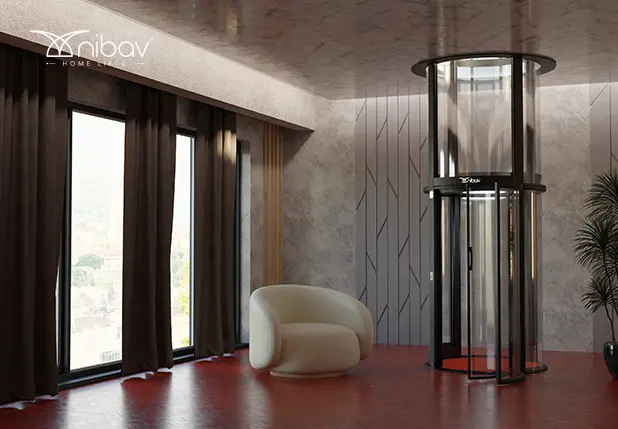
Vacuum Elevators for Wheelchair Accessibility: Features and Benefits Every Homeowner Should Know
Finding a home elevator that genuinely works for a wheelchair user is harder than it should be. Most traditional lifts were designed around able-bodied passengers first, leaving wheelchair accessibility as an afterthought — narrow doors that force an awkward squeeze, high thresholds that catch on wheels, and cabins too small for a chair and an attendant to travel together comfortably.
That gap between what’s marketed as “accessible” and what actually works day to day leaves a lot of families settling for stair lifts or ramps that solve part of the problem while creating new frustrations of their own.
Vacuum elevators have changed this equation considerably. Built on air-driven technology rather than traditional hydraulic or traction systems, they offer a self-supported, pitless design that opens up genuine flexibility in cabin size, door width, and threshold height — the exact details that determine whether a wheelchair user can move through a home independently or needs help at every turn.
This guide walks through what makes vacuum elevators a meaningfully different option for wheelchair accessibility, and what to actually check before choosing one.
Table of Contents
▾- What Are Vacuum Elevators and Why Do They Matter for Wheelchair Accessibility
- The Specific Design Features That Make a Vacuum Elevator Wheelchair-Friendly
- Safety Features That Matter Most for Wheelchair Users
- Comparing Vacuum Elevators to Other Home Accessibility Options
- Installation and Space Planning for Wheelchair-Accessible Vacuum Elevators
- Why Nibav’s Wheelchair-Accessible Models Stand Out
- What Makes Nibav Different for Wheelchair-Accessible Installations
- Frequently Asked Questions
- 11. What cabin size is needed for a wheelchair to fit comfortably in a vacuum elevator?
- 2. Are vacuum elevators safe for someone travelling alone in a wheelchair?
- 3. Do vacuum elevators require a pit or machine room for wheelchair-accessible installations?
- 4. How is a vacuum elevator different from a wheelchair platform lift?
- 5. Can a vacuum elevator accommodate both a wheelchair and an attendant at the same time?
What Are Vacuum Elevators and Why Do They Matter for Wheelchair Accessibility
A home elevator uses air pressure differentials to move a self-contained cabin vertically through a shaft, rather than relying on hydraulic pistons, cables, or a traditional counterweight system.
Because the entire mechanism is self-supported, the shaft doesn’t require a dug pit or a separate machine room — which matters enormously for accessibility planning, since it means the cabin footprint can be designed around the passenger’s needs rather than around structural constraints inherited from conventional elevator engineering.
This flexibility is exactly why vacuum elevators wheelchair users increasingly favour traditional home lifts.
Where a conventional hydraulic elevator’s cabin size is often dictated by the depth of the pit and the space available for a machine room, a vacuum elevator’s compact, self-supporting shaft allows manufacturers to prioritise cabin diameter and door width — the two dimensions that actually determine whether a wheelchair fits comfortably.
The Specific Design Features That Make a Vacuum Elevator Wheelchair-Friendly
Not every vacuum elevator is automatically wheelchair-accessible — capacity and cabin dimensions vary meaningfully across models. The features that genuinely matter for wheelchair use include:
- Wide door openings — a narrow door forces a wheelchair user to enter at an angle or bump against the frame, which is uncomfortable and, over time, damaging to both the chair and the doorway.
- Low or flush cabin thresholds — even a small lip at the entry point can catch a wheelchair’s front wheels, creating a fall risk during unassisted entry.
- Adequate internal cabin diameter — enough room for the wheelchair itself, plus space for an attendant to travel alongside when needed, without cramped manoeuvring.
- Higher rated weight capacity — a wheelchair, its user, and often an attendant add up to more weight than a typical single-passenger trip, so capacity needs to be checked carefully rather than assumed.
These details rarely show up clearly in general marketing material, which is why it’s worth asking directly about door width, threshold height, and internal cabin diameter — not just overall capacity — when evaluating any model for wheelchair use specifically.
Safety Features That Matter Most for Wheelchair Users
Safety considerations shift somewhat when the primary user has limited mobility. The features worth prioritising include:
- Automatic emergency descent — ensures the cabin returns to the nearest floor during a power failure, rather than leaving a wheelchair user stranded without the ability to exit unassisted.
- Door interlock and detection systems — confirm the door is fully sealed before the cabin moves, reducing risk during transfer in and out.
- Battery backup for lighting and communication — particularly important if a wheelchair user is travelling without an attendant present.
- Smooth, low-vibration ride quality — sudden jolts or uneven stops can be genuinely uncomfortable, or even risky, for passengers with limited ability to brace themselves.
Comparing Vacuum Elevators to Other Home Accessibility Options
Wheelchair users and their families typically weigh a few different accessibility solutions before deciding:
- Stair lifts require transferring from the wheelchair onto a seated platform — a genuinely difficult or impossible step for some users, and one that removes a measure of independence and dignity.
- Ramps solve horizontal access but do nothing for multi-storey homes, and steep ramps can themselves become a safety hazard.
- Platform lifts accommodate a wheelchair without a transfer, but many older platform lift designs still require a pit or extensive structural work.
- Vacuum elevators combine wheelchair-friendly design with a self-supported, pitless installation — offering full-cabin accessibility without the structural demands of traditional platform or hydraulic lifts.
For households where multiple floors need to be genuinely accessible — not just the ground floor — a vacuum elevator with the right cabin dimensions is often the only option that avoids daily compromise.
It’s also worth factoring in long-term needs when comparing these options: mobility requirements can change over time, and a solution that only addresses today’s level of independence may need to be replaced entirely if a family member’s needs progress, whereas a well-sized vacuum elevator tends to remain suitable across a wider range of future scenarios.
Installation and Space Planning for Wheelchair-Accessible Vacuum Elevators
Because vacuum elevators use a self-supported shaft, installation planning focuses primarily on clear floor space and headroom rather than excavation or reinforcement.
For wheelchair accessibility specifically, it’s worth planning for a larger-capacity cabin from the outset — retrofitting a bigger shaft later, once a smaller model is already installed, is far more disruptive than sizing correctly the first time.
A proper on-site assessment should confirm door swing clearance, turning radius outside the cabin, and floor-to-floor height before finalising any model choice.
Why Nibav’s Wheelchair-Accessible Models Stand Out
Nibav’s larger-capacity configurations — including the Series III Max, Series IV Max, and Series V Max — are specifically engineered with wider cabin diameters and broader door openings designed to accommodate a wheelchair alongside an attendant, rather than treating accessibility as an incidental benefit of a bigger cabin.
The GlideWide™ door system used across Nibav’s larger models delivers one of the widest cabin entries in the category, which directly addresses the narrow-door problem that makes many home lifts impractical for wheelchair users in daily use.
Every Nibav model, regardless of capacity, carries the same TÜV NORD certified safety architecture — automatic emergency descent, battery backup, and door interlock systems — so choosing a larger, wheelchair-accessible configuration never means a reduced safety standard.
The self-supported, pitless shaft also means installation avoids the excavation and machine room construction that would otherwise complicate retrofitting an accessible lift into an existing home.
What Makes Nibav Different for Wheelchair-Accessible Installations
Where many home elevator providers treat wheelchair accessibility as a specification to check off rather than a design priority, Nibav’s larger cabin models are built around genuinely spacious internal diameters — up to 1240mm — specifically to give a wheelchair user and an attendant room to travel together without cramped manoeuvring.
Combined with a low-threshold entry and the AutoGlide™ automatic door system available on Series V Max, which removes the need to manually operate a door while managing a wheelchair, Nibav addresses the practical friction points that generic “accessible” marketing language often glosses over. A visit to a Nibav experience centre lets families physically test cabin space and door clearance with an actual wheelchair before committing — a level of hands-on verification that’s difficult to get from specifications alone.
Frequently Asked Questions
11. What cabin size is needed for a wheelchair to fit comfortably in a vacuum elevator?
An internal cabin diameter of at least 1160–1240mm generally provides enough space for a wheelchair and an attendant to travel together comfortably, though the ideal size depends on the specific wheelchair dimensions and whether assistance is needed.
2. Are vacuum elevators safe for someone travelling alone in a wheelchair?
Yes, provided the model includes automatic emergency descent, door interlock systems, and battery backup — these features ensure the cabin remains safe and accessible even during a power failure or other disruption, without requiring an attendant to intervene.
3. Do vacuum elevators require a pit or machine room for wheelchair-accessible installations?
No — most modern vacuum elevators use a self-supported shaft that eliminates the need for a pit or machine room, which simplifies retrofitting a wheelchair-accessible lift into an existing home considerably.
4. How is a vacuum elevator different from a wheelchair platform lift?
A vacuum elevator provides a fully enclosed cabin that travels through a dedicated shaft, while a platform lift typically involves an open platform. Vacuum elevators generally offer a more comfortable, weather-protected, and dignified experience for daily use.
5. Can a vacuum elevator accommodate both a wheelchair and an attendant at the same time?
Yes, provided the model has sufficient cabin diameter and rated weight capacity — this is worth confirming specifically, since not all vacuum elevator models are sized for dual occupancy.

Raghavendra S
This was a very helpful article for understanding how vacuum elevators can improve accessibility at home. I particularly liked the explanation of wide doors, low thresholds, cabin space, and emergency safety features. These practical points are often overlooked when choosing a home lift. The guide gives families a better understanding of what to look for in Wheelchair Accessible Vacuum Elevators.
Deepa Krishnamurthy
I found this guide informative and easy to follow, especially the comparison between ramps, stair lifts, platform lifts, and vacuum elevators. The focus on maintaining independence for wheelchair users makes the information particularly useful for families planning long-term accessibility. The details about pitless installation and cabin dimensions also make Wheelchair Accessible Vacuum Elevators worth considering.
Manoj Balakrishnan
A useful read for homeowners who are planning accessibility improvements for family members using wheelchairs. I appreciated that the article does not focus only on elevator capacity but also explains door width, threshold height, turning space, and attendant requirements. These are important everyday considerations that can easily be missed when comparing different home elevator options.
Kavitha Narayanan
This article gave me a much clearer idea of what makes a home elevator genuinely wheelchair-friendly. The sections on automatic emergency descent, battery backup, door detection, and smooth travel were particularly useful. I also liked the advice to select the cabin size carefully during the initial planning stage rather than trying to upgrade later. A worthwhile guide for families considering Wheelchair Accessible Vacuum Elevators.
Aditya Shetty
Really helpful information for Indian homeowners looking for a convenient accessibility solution without extensive structural changes. The explanation of self-supported and pitless vacuum elevator designs was easy to understand, while the discussion about wheelchair and attendant space addressed an important practical concern. This guide is a good starting point for anyone researching Wheelchair Accessible Vacuum Elevators for their home.