 By shanmugapriya on August 18, 2026
|
By shanmugapriya on August 18, 2026
|



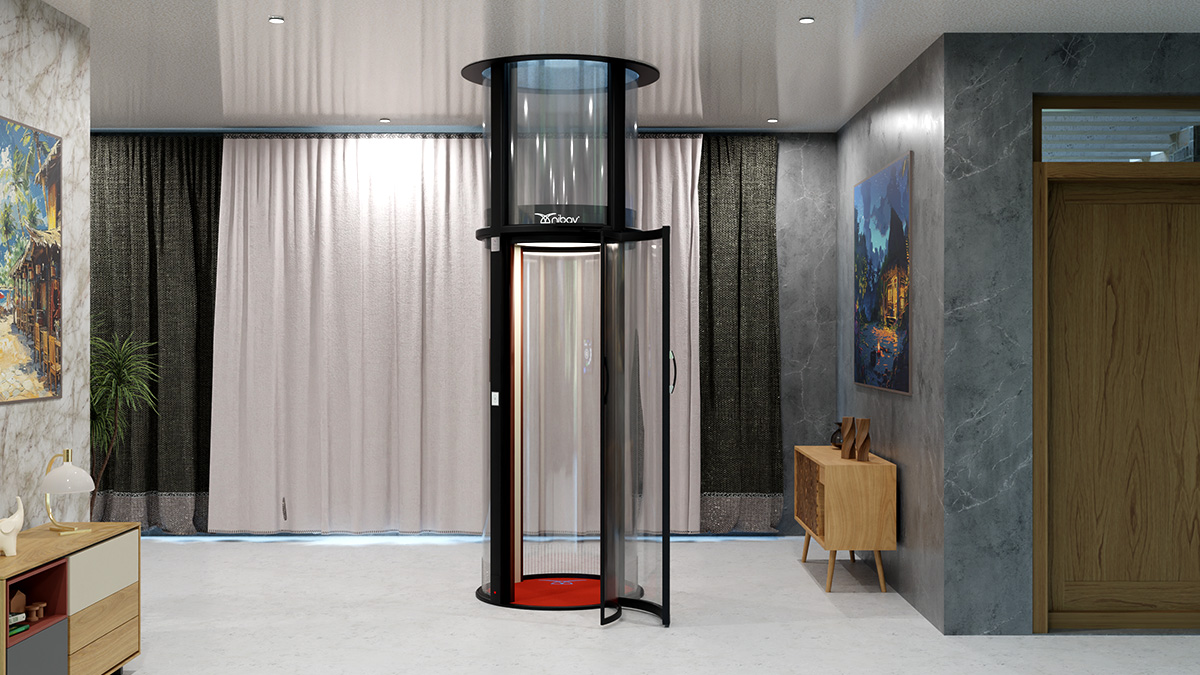
Home Elevator Repair Case: How Technical Teams Diagnose and Resolve Service Requirements
In a G+2 villa, an elderly resident presses the call button on the home elevator and the cabin does not respond. The display is illuminated and the doors are closed, but the lift will not move.
What follows is typically twenty minutes of speculation. Is the fault in the motor, the power supply, or the door circuit? Is another occupant now stranded on an upper floor? In a household where stairs are already difficult, a stalled lift is not a minor inconvenience — it is the loss of access to half the property. In most cases the uncertainty is more disruptive than the fault itself, because homeowners have no framework for interpreting what has gone wrong.
This walkthrough of a routine home elevator repair case provides that framework. It sets out which symptoms indicate which subsystem, which checks a homeowner can safely carry out before calling for assistance, how a trained elevator technical team isolates a fault, and — for Nibav Home Lift owners specifically — how to raise a service request and what the support structure covers.
Table of Contents
▾- What a Home Elevator Repair Case Actually Involves
- Common Home Elevator Troubleshooting Symptoms and What They Signal
- How the Nibav Elevator Technical Team Diagnoses a Fault
- Nibav Home Lift Service and Support: What You Get
- Why Nibav’s Air-Driven Design Reduces Repair Requirements
- How to Raise a Nibav Home Lift Service Request
- Frequently Asked Questions
What a Home Elevator Repair Case Actually Involves
A service call is not a single action. It is a sequence, and understanding the sequence tells you whether your provider has a process.
A well-run residential elevator repair case moves through five stages. Intake, where the support desk captures the exact symptom, floor, sounds and any error message. Remote triage, where error codes and trip logs are read or relayed so the right spare part travels with the right technician. On-site diagnosis, isolating the subsystem and confirming root cause rather than visible effect. Resolution — repair, replacement, recalibration or software correction. And finally verification and handover, with test cycles at every floor, individual safety-feature checks, and an explanation to the homeowner of what failed and why.
Providers who skip that last stage generate repeat visits. It is worth asking about specifically.
Common Home Elevator Troubleshooting Symptoms and What They Signal
Most home lift repair calls fall into a small set of recognisable patterns. Learning them helps you describe the problem accurately, which is the single biggest factor in first-visit resolution.
The cabin will not move at all. Usually a door-circuit issue rather than a motor issue. Home lifts are designed not to move unless every landing door and the cabin door is fully closed and locked. A door that looks shut but has not engaged its lock will silently disable the lift — a safety interlock working correctly, not a breakdown.
The lift stopped between floors. Typically triggered by a power interruption or a pressure or speed deviation detected by the safety system.
Unusual noise or vibration during travel. Points to suspension, mounting or seal components. Noise that changes with direction of travel is diagnostically useful — mention it.
Doors open or close inconsistently. Sensor alignment, an obstruction in the track, or a landing-door lock needing recalibration. Often the cheapest fix on this list.
The cabin stops slightly above or below floor level. A precision-landing calibration issue, and worth fixing promptly, because a lip at the threshold is a trip hazard for exactly the users who most need the lift.
Lights, fan or screen dead but travel works. Almost always the auxiliary battery circuit rather than the drive system.
Longer travel times or rising consumption. In an air-driven lift, gradual performance drift can indicate seal wear. Homeowners tend to ignore this one, and shouldn’t — early attention is far cheaper.
Before you call, run these safe checks: confirm the dedicated MCB or isolator is on; walk every floor and check each landing door is fully closed; look for an obstruction in a door track; check whether the child-safety switch or parental schedule has been left active; and note any recent voltage fluctuation, lightning event or generator changeover. Photograph the display. Never force doors, open panels or attempt electrical work.
How the Nibav Elevator Technical Team Diagnoses a Fault
Nibav technicians work by elimination, in a fixed order, from safest and simplest outward — a sequence built around the specific architecture of an air-driven lift.
Supply first. Voltage at the isolator and phase stability. Nibav lifts run on single-phase power drawing around 3.7 kVA while ascending, so supply instability is checked before anything mechanical.
Then the machine’s own account. Nibav’s silent main board maintains trip logs and error codes and supports software updates, so the controller can be interrogated about what it believed was happening at the moment of the fault. This is faster and more reliable than physical inspection.
Then the safety chain. Cabin door detection, landing-door locks, the multi-layered locking system, Smart Overload Alert and emergency-descent circuitry. Because the safety chain is designed to inhibit movement, it is the most common reason a perfectly healthy lift refuses to run.
Then the pneumatic system. Cylinder pressure integrity, turbine and motor performance, and the carbon seal within Nibav’s fused locking assembly.
Then mechanical alignment. Landing levels against the precision landing lever, Brakes 3.0 condition, suspension and isolation-pad mounting.
Finally, replication. The case is not closed until the technician has reproduced the original conditions and confirmed correct behaviour at every stop in both directions, with each safety feature tested individually.
Nibav Home Lift Service and Support: What You Get
Nibav backs its installed base with support structured around reachability rather than a single call centre. Sales and service run on separate channels, so a live fault is never queued behind a purchase enquiry.
| Support element | What it covers | How to reach it |
| Service email | Non-urgent requests, AMC queries, written records | servicecare@nibavlifts.com |
| Always-Ready phone support | Round-the-clock triage and guidance | Service helpline |
| Smart on-site support | Trained technician visit, diagnosis and repair | Raised via helpline |
| Stationary GSM in cabin | Two-way emergency communication, works even when the lift is idle or coverage is weak | Built into the cabin |
| SmartConnect™ (Series V / V Max) | Emergency comms integrated into the touchscreen — functions during power outages | In-cabin touchscreen |
| Technician network | 500+ technicians worldwide; 40+ experience centres across India within a 55+ global network | Nearest experience centre |
| CoreShield™ warranty (Series V / V Max) | 25-year cover on the motor and vacuum seal | Service helpline |
| Motor 2.0 extended warranty (Series IV) | Extended cover on the motor assembly | Service helpline |
| Support element | What it covers | How to reach it |
| Service email | Non-urgent requests, AMC queries, written records | servicecare@nibavlifts.com |
Nibav owners tend to comment on this stage rather than on the product. One wrote that a single call to customer care brought a technician who “handled the issue patiently and professionally,” adding that “knowing that there is strong support behind the product makes us feel confident about our decision.” A G+3 owner four months into ownership described the maintenance team as “quite knowledgeable about the product and its functionality” — which matters, because product-specific familiarity is what separates a one-visit fix from three.
Why Nibav’s Air-Driven Design Reduces Repair Requirements
The most useful thing a manufacturer can do about repairs is design for fewer of them.
Nibav’s home elevators use pneumatic pressure rather than cables, counterweights, pulleys and a machine room. Fewer moving parts means fewer wear points. The system needs no pit and no machine room, uses grease-less engineering that removes an entire category of lubrication servicing, and consumes zero power while descending.
Individual technologies target the specific faults that generate service calls. Isolation pads around the motor absorb vibration before it propagates into fittings. Suspension 2.0 and Quiet 3.0 reduce the mechanical stress behind noise complaints. Fused locking technology with a carbon seal is engineered for maintenance-free cylinder operation. Brakes 3.0 with precision landing addresses the levelling drift that otherwise recurs. Programmable Auto Return reduces unnecessary travel cycles. And the CoreShield™ 25-year warranty on the Series V covers the motor and vacuum seal — the two components whose failure would be most disruptive.
The lifts are TÜV NORD certified and built to comply with European safety standards, with ISO certification behind the manufacturing. The CKD construction also means components are modular and replaceable in place rather than requiring the shaft to be dismantled.
How to Raise a Nibav Home Lift Service Request
If the cabin has stopped between floors, use the emergency landing switch inside the cabin to descend to ground level and exit — you do not need to wait for a technician. If the lift is unresponsive, walk every floor and confirm each landing door is fully closed before calling; it resolves a meaningful share of calls in under two minutes.
One thing to avoid entirely: do not allow an unauthorised local technician to open the unit. Nibav lifts use calibrated safety chains, a sealed pneumatic assembly and proprietary control software. Uncertified intervention risks disturbing safety systems and typically voids warranty cover.
Frequently Asked Questions
1. My Nibav lift stopped working after a power cut. What should I do?
Nibav lifts descend automatically to ground level during a power failure so passengers can exit safely. Once supply returns, check the lift’s dedicated isolator and confirm every landing door is fully closed — the lift will not move unless the door circuit is complete. If it remains unresponsive, or if it stopped between floors, use the in-cabin emergency landing switch to exit and call the service helpline.
2. Is repair covered under my Nibav warranty?
Manufacturing and material defects within the applicable warranty term are covered. Coverage is tiered by component: the Series V and Series V Max carry the CoreShield™ 25-year warranty specifically on the motor and vacuum seal, and Series IV models carry an extended warranty on the Motor 2.0 assembly. Routine maintenance, cosmetic wear, surge damage and any damage following unauthorised servicing are generally excluded. Check the warranty document issued with your installation, and call the service helpline to confirm your specific cover.
3. Can a local technician repair my Nibav home lift?
It is strongly discouraged and will typically void warranty cover. Nibav lifts use a sealed pneumatic cylinder, calibrated safety interlocks and proprietary control software — uncertified intervention risks disturbing safety systems. Use the authorised service channel.
4. How quickly can a Nibav technician reach me?
Nibav operates 40+ experience centres across India within a global network of 55+, backed by 500+ technicians worldwide, which keeps travel times short in most metro and tier-2 locations. Response commitments depend on your city and AMC terms — confirm yours with the service team.
5. Why is my Nibav lift making a noise it did not make before?
Report it rather than waiting. Noise usually originates in suspension, mounting or seal components and is far cheaper to address early. Note whether it occurs going up, going down or both — it materially narrows the diagnosis.