 By Sriram on March 17, 2026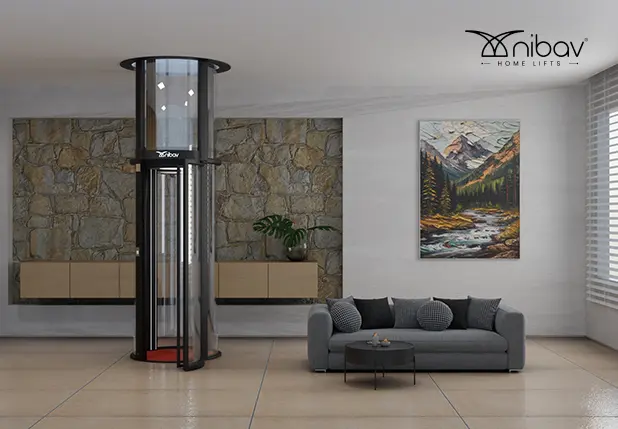
As people age, moving around the house can become more challenging. In many Indian homes built across multiple floors, stairs may gradually become difficult for elderly family members. Climbing steps several times a day can increase fatigue, strain joints, and raise the risk of falls.
This is why Home Lifts for Elderly in India are becoming an essential mobility solution for residential homes. A home lift allows seniors to move between floors safely and comfortably without depending on stairs.
However, the most important factor when selecting a lift for elderly users is safety. The right elevator should include safety systems that protect passengers, provide easy access, and ensure smooth operation.
Before considering design or price, homeowners must first understand the safety features that make home lifts suitable for elderly residents. In this guide, we will explore the most important safety systems, followed by accessibility features, technical specifications, and factors that influence Home Lifts for Elderly cost.
Table of Contents
▾Key Safety Features You Must Consider
When selecting Home Lifts for Elderly in India, safety is the single most important aspect. A residential elevator specifically designed for senior citizens must be equipped with multiple safety mechanisms in order to provide reliable operation and ensure the safety of the passenger.
1. Emergency Descent System
There may be unexpected power failures. A home lift that is designed for elderly users will automatically lower to the nearest floor during a power failure. This way, passengers can exit the elevator in a safe manner.
Nibav home lifts have an automatic emergency descent system built into them, so that elderly passengers can never become trapped inside of the elevator cabin.
2. Safety Brakes for Mechanical Use
Another essential safety element is the mechanical braking system. The system is automatically activated if the elevator detects abnormal movement or pressure imbalance while traveling.
This keeps the cabin stable and prevents unsafe movement during lift operation.
3. Door Safety Interlock
When the door of the elevator is opened, an interlock prevents it from being opened until the elevator cabin is aligned perfectly with the floor.
This means that passengers cannot exit from the cabin unless the elevator has come to rest on the floor.
4. Emergency Alarms
Residential lifts feature emergency alarm buttons on the interior of the lift cabin to allow residents to signal for help, should assistance be required while using the lift.
Nibav lifts are designed with built-in emergency alarms so that senior citizens can call for help while they are in the lift if needed.
5. Overload Protection
All residential lifts for senior citizens use overload sensors to disable the lift when overweight.
Most residential lifts for senior citizens support:
- A weight limit of two passengers (210 kg)
- A weight limit of three/four passengers (240 kg)
This will allow a senior citizen to escort a caregiver during the use of the lift.
Accessibility Features That Make Lifts Elderly-Friendly
Accessibility features of the home lifts for elderly residents in India both improve safety for the short-term and improve the elderly’s ease of use over the long run.
1. Easy Access to the Home Lift
Elderly passengers can easily get into and out of the lift, and Nibav home lifts have an extremely wide entry to make it very easy for seniors to enter and exit safely with or without assistance.
2. Accessibility for Wheelchair Users
Access for wheelchair users is critical to meeting the needs of the elderly and those with mobility issues. Nibav home lifts provide large cabins that accommodate a wheelchair and provide ample room for a caregiver to accompany the elderly passengers on their journey in the lift.
3. Panoramic Cabin to Reduce Claustrophobic Feelings
Older people may not like the feeling of being enclosed in an elevator cabin. The Nibav lift’s solution to this issue is a transparent, panoramic cabin built with polycarbonate, which allows individuals to look out of the windows while they are using the lift as they travel.
This makes them feel less claustrophobic, while also offering increased light and visibility.
4. Smooth Gentle Ride
Elderly users appreciate the comfort of the ride when using a lift. For instance, when an elevator stops suddenly or vibrates, it may lead to discomfort.
Nibav elevators create a smooth ride by using air-powered pneumatic technology to power the movement of the cabin within the elevator shaft through controlled air pressure.
This method provides:
- Gentle starting and stopping motion
- Reduced vibration and sound
- Quiet operation
Easy Controls and Smart Monitoring
Selecting home lifts for the elderly has an important consideration of ease of use.
Nibav lifts have been designed with simple controls on the lift panel so that older users can simply press a button to choose the level they need.
The buttons are positioned at a height where any user can press them; whether they are standing or in a wheelchair, they will have no difficulty using the lift.
Some models also have a smart monitoring system to measure the performance of the lift and to identify any irregularity in the way it has functioned.
Technical Specifications to Consider
Understanding technical specifications will help homeowners select the best lift for elderly use.
Load Capacity
Lifts are rated based on their load capacities, which typically are:
- 210 kg capacity (2 users)
- 240 kg capacity (3–4 users)
This design allows for sufficient comfort for the older passenger and a caregiver to use a lift together when necessary.
Capacity of Lift Floors
Most Nibav lifts can support:
- 2–4 Stops (G+3 Floors)
- Travel Height up to 13,500 mm
Space Needed
Nibav lifts are designed for compact size and residential installation.
Typical dimensions:
- Cabin Diameter: 749 mm – 1160 mm
- External Cylinder Diameter: 933 mm – 1363 mm
Since Nibav lifts use a self-supporting structure, they can be installed in stair voids, corners of rooms, or balconies with no major structural alterations necessary.
Efficiency of Energy
Energy consumption has an impact on the costs of Home Lifts for the Elderly.
Nibav lifts are pneumatic (air-driven) elevators. They use electric power only for upward travel, and during descent the cars rely on air pressure and gravity.
Energy consumption using Nibav lifts will be much lower, making them effective for residential applications.
Understanding Home Lifts for Elderly Cost
Home lifts costs for senior citizens include the following components:
- Lift make and technology
- Cabin size and passenger count
- Floors
- Customisation
- Installation conditions
The cost of residential elevators in India starts at approximately ₹11–12 lakhs depending on configuration.
While the cost also differs, the safety and accessibility aspects of home lifts make them a great addition for senior citizens’ homes.
Conclusion
When shopping for a home lift for an elderly person in India consider what safety features will keep them safe when riding in the lift.
The lift should have:
- Emergency descent systems
- Door safety interlocks
- Overload protection
- Emergency alarms
- Reliable smooth/stable ride technology
Adding accessibility features to any of these safety systems will create a reliable mobility solution for elderly persons, enabling them to move from one floor to another within their houses while maintaining their independence.
FAQs
1. Which home lift models would work best for elderly people living in India?
Safety is one of the main priorities when building an elderly person lift in your home. Therefore, most of the best elderly lifts will have safety interventions such as emergency descent, door interlocks, smooth pneumatic lift operation, and wheelchair accessible cabins.
2. The cost of a home lift for the elderly in India?
The cost of purchasing a home lift for an elderly person in India will range substantially depending upon the particular lift model as well as the configuration you choose. The range of price will generally be around ₹11–₹12 lakhs.
3. Are home lifts for the elderly safe to use?
Yes. Home lifts built in modern day typically come with safety systems to help you operate safely. Some of these systems include a braking system for emergency descent, door closings of the lift, alarms when the elevator door is open, and an overload indicator on the lift to accurately indicate weight while using the lift.
4. Are elderly people able to operate home lifts?
Yes, home lifts for elderly people from Nibav have very easy to read and use control panels that are positioned at an accessible height for all elderly individuals.
5. Will home lifts be able to accommodate wheelchair users?
Yes, most home lift models are designed with very roomy cabins as well as entry ways that will allow access to any size wheelchair.