 By shanmugapriya on July 17, 2026
|
By shanmugapriya on July 17, 2026
|



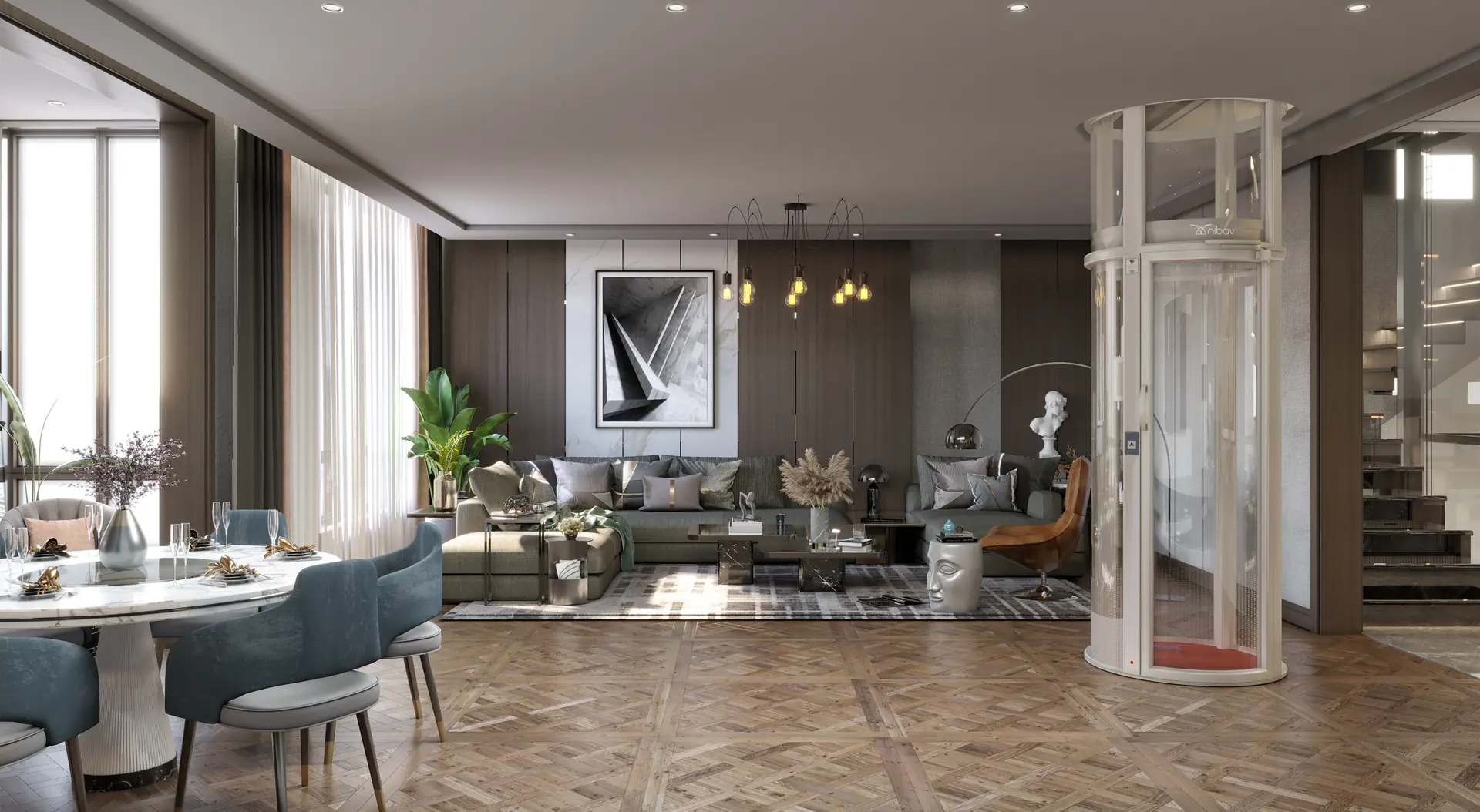
Best 2 Person Elevator in Chennai for Compact Homes (2026 Buyer’s Guide)
You built the home carefully. Every room has a purpose. Every square foot is accounted for. And somewhere between the ground floor and the first floor, the staircase that felt perfectly normal ten years ago has become the thing the whole family quietly negotiates around.
The elderly parent who grips the railing a little longer now. The spouse recovering from a knee procedure who’s spending most of their time on one floor. The toddler who makes your heart rate spike every time they’re near the top step. The weekly carry of groceries, laundry, and everything else that makes a multi-floor home feel like twice the work it should be.
A 2 person elevator in Chennai solves all of this — and for compact Chennai homes on tight plots, it does so without demanding structural changes, a machine room, or weeks of construction. Here is the complete, honest guide to choosing the right one.
Table of Contents
▾- What Is a 2 Person Elevator and Why Chennai Homes Need One
- Space Requirements for a Small Home Lift in Chennai: What You Actually Need
- Key Features to Look for in a 2 Person Elevator for Your Chennai Home
- Comparing 2 Person Elevator Technologies: Which Works Best in Chennai?
- What Else to Consider Before Installing a Home Elevator in Chennai
- Why Nibav Home Lifts Is the Right Choice for Chennai’s Compact Homes
- Frequently Asked Questions: 2 Person Elevator in Chennai
- 1. What is the minimum space needed for a 2 person elevator in Chennai?
- 2. How long does it take to install a 2 person home elevator in Chennai?
- 3. Is a 2 person home elevator safe during Chennai’s frequent power cuts?
- 4. Can a 2 person elevator be installed in an existing Chennai villa?
- 5. Which is better for a compact Chennai home — a 2 person standard or Max model?
What Is a 2 Person Elevator and Why Chennai Homes Need One
A 2 person elevator — also called a residential lift or home elevator — is a compact cabin system designed to carry one to two occupants between floors. Unlike commercial elevators built for apartment blocks or office buildings, residential 2 person lifts are engineered specifically for private homes: smaller footprints, quieter operation, faster installation, and designs that complement rather than intrude on home interiors.
In Chennai specifically, the need for compact vertical mobility has grown significantly in the last decade. The city’s independent housing stock — villas, duplexes, and multi-storey independent houses across areas like OMR, Anna Nagar, Adyar, Velachery, Porur, and Tambaram — is predominantly multi-floor. Families built vertically because plots are compact and land is expensive. The result is millions of Chennai homes where daily stair use is unavoidable — and increasingly, where it’s becoming a problem.
A home elevator in Chennai sized for two people addresses this without the structural complications of a larger system. The cabin is precisely sized for comfortable two-occupant travel, the footprint is manageable in tight Chennai plots, and the most advanced models install without touching the existing structure of the building.
Target audience this guide serves:
- Homeowners in Chennai’s compact villa and duplex markets
- Families with elderly parents needing daily floor access
- Post-surgery or mobility-challenged residents
- Professionals in their 40s–50s planning ahead for accessibility
- NRI families investing in Chennai properties for parents
Space Requirements for a Small Home Lift in Chennai: What You Actually Need
Space anxiety is the most common reason Chennai homeowners delay this decision — and it’s almost always based on an outdated image of what a residential lift requires.
Modern compact 2 person home elevators need remarkably little floor area:
- Standard 2-person models: 1010 mm clear floor diameter
- Larger accessible models: 1430 mm clear floor diameter
- Machine room space: Zero (with air-driven vacuum technology)
- Pit space: Zero (pitless design)
To contextualise 1010 mm: it is smaller than a standard Indian bathroom. In the majority of Chennai homes, this footprint exists in multiple locations — under an open staircase, in a corner of the living area, in the car porch, or adjacent to an exterior wall.
The installation process for compact residential lifts involves:
- A site feasibility assessment to confirm placement
- Clean circular floor openings at each level (no structural walls removed)
- Shaft assembly in modular sections
- Cabin, motor, and electrical connection
- Safety testing and handover
Total timeline: 24–48 working hours for most Chennai G+1 or G+2 homes. No extended construction. The home remains fully liveable throughout.
For Chennai’s typical residential layouts — particularly in areas like Sholinganallur, Perungudi, Neelankarai, and ECR where independent villas and duplexes are common — this compact installation process is specifically suited to the building styles and plot sizes that predominate.
Key Features to Look for in a 2 Person Elevator for Your Chennai Home
Not all compact home elevators are built equally. Before committing to a purchase, evaluate these criteria carefully:
1. Safety Certification — The Non-Negotiable
The most important question to ask any home elevator brand in Chennai: what independent safety certification does this product carry?
TÜV NORD Certification — issued by an independent European technical authority — is the most credible standard available in the Indian residential elevator market. It means the product has been tested against European safety norms by a third party, not self-assessed by the manufacturer.
Also look for these as standard (not optional upgrades):
- Automatic emergency descent on power failure
- Battery backup maintaining lighting and ventilation
- Triple-layer door detection and interlock system
- Child safety lock
- Smart overload protection
- Rapid Rescue Latch for external access
Chennai’s power supply — particularly during monsoon season — makes automatic emergency descent an especially practical safety requirement, not just a theoretical one.
2. Energy Efficiency
A small home lift in Chennai used by a family of 4–5 daily for 10–15 trips should not meaningfully impact the electricity bill. Look for:
- Air-driven (vacuum) technology that uses zero power on descent
- Single-phase power connection (avoids costly electrical infrastructure)
3. Noise Level
Chennai homes — particularly in dense residential areas — are close together. A lift that operates at 55 dB or below (quieter than a normal conversation) is what you want. Ask specifically for operating noise levels, not just claims of “quiet” operation.
4. Aesthetic Integration
A compact 2 person elevator placed in a Chennai home’s living area, entrance, or staircase void should enhance the interior, not interrupt it. Transparent polycarbonate shaft designs allow light to pass through and maintain visual openness. Premium finish options — metallic, textured, hydro-gloss exteriors, leather cabin interiors — let the lift complement your home’s existing design direction.
5. Warranty and Post-Installation Support
Ask for:
- What components the warranty covers
- For how long
- Whether labour is included after the warranty period
- Local service team response time in Chennai
A brand headquartered or with a strong service presence in Chennai is a meaningful advantage — service calls are faster, technicians know local conditions, and AMC costs are lower.
Comparing 2 Person Elevator Technologies: Which Works Best in Chennai?
Chennai homeowners will encounter three main technologies when researching compact home elevators:
- Hydraulic Lifts: Use fluid-driven pistons to move the cabin. Require a pit (200–400 mm excavation) and a machine room. Fluid-based components are susceptible to degradation in Chennai’s high humidity and temperatures. Higher AMC costs. Better suited to larger commercial applications.
- Traction/Cable Lifts: Motor and cable counterweight systems. Structurally demanding — require a dedicated shaft and machine room. More appropriate for apartment buildings than standalone Chennai villas.
- Air-Driven Vacuum Elevators: Use air pressure differential to move the cabin. No pit. No machine room. No hydraulic fluid. Self-supporting transparent shaft. Install in 24–48 working hours. Zero power on descent. Best suited to Chennai’s residential housing stock, coastal climate, and compact plot sizes.
For most Chennai homeowners with G+1 to G+3 homes, air-driven technology is the most practical, most cost-effective, and most aesthetically appropriate choice.
What Else to Consider Before Installing a Home Elevator in Chennai
- Building society or RWA approval: For standalone villas and independent houses in Chennai, this is typically not required. For homes within gated communities in OMR or Porur, check with your RWA before proceeding. Your installation team can advise.
- Ceiling height: Most Chennai homes with standard 2,700–3,000 mm ceilings are fully compatible with compact residential lifts. The only requirement above the top floor is adequate headroom for the motor head unit — your site assessment will confirm this.
- Relocation compatibility: If you may move within Chennai (or out of the city) in the next 10–15 years, ask whether the lift can be dismantled and reinstalled. The best compact home elevator designs — Completely Knocked Down (CKD) builds — are designed for exactly this. It is a meaningful financial consideration for younger families.
- Future-proofing accessibility: A 2-person standard model carries 210 kg — sufficient for most daily household use. If there is any possibility of mobility-assisted travel or attendant-assisted access in the future, a Max model with 240 kg capacity and 1160–1240 mm internal cabin diameter accommodates this comfortably. Installing the right size once is far cheaper than upgrading later.
Why Nibav Home Lifts Is the Right Choice for Chennai’s Compact Homes
Among the residential lift brands available in Chennai, Nibav stands out for two reasons that matter specifically to compact home buyers.
First, Nibav is headquartered in Chennai — at Neelankarai — which means shorter installation wait times, faster service response, and a team that understands the city’s residential architecture, plot sizes, and climate-specific requirements firsthand.
Second, every Nibav model is TÜV NORD Certified, pitless, machine-room-free, and installed in 24–48 working hours. The entry-level Series III Standard — at ₹11,99,000* for a G+1 installation — is the most space-efficient model in the range, requiring just 1010 mm of clear floor diameter. It carries 210 kg, serves up to 4 stops, and delivers a certified, fully-featured residential elevator experience at the most accessible price point in the premium compact lift segment.
For homeowners who want to experience the product before committing, Nibav’s Chennai experience centre in Neelankarai has working models you can step inside.
Frequently Asked Questions: 2 Person Elevator in Chennai
1. What is the minimum space needed for a 2 person elevator in Chennai?
Modern compact air-driven home elevators need as little as 1010 mm of clear floor diameter for standard models. No pit or machine room space is required with vacuum elevator technology. This footprint is smaller than a standard Indian bathroom.
2. How long does it take to install a 2 person home elevator in Chennai?
Air-driven home elevators install in 24–48 working hours in most Chennai residential installations. No structural changes, no excavation, and the home remains fully liveable throughout.
3. Is a 2 person home elevator safe during Chennai’s frequent power cuts?
Yes — certified home elevators include automatic emergency descent and battery backup. When power is cut, the cabin descends safely to the nearest floor with lighting and ventilation active. Passengers exit normally without technician assistance.
4. Can a 2 person elevator be installed in an existing Chennai villa?
Yes. Modern pitless, self-supporting home elevators are specifically designed for retrofit installation in existing homes. No structural changes to walls, foundations, or ceilings are required beyond clean floor openings at each level.
5. Which is better for a compact Chennai home — a 2 person standard or Max model?
For daily 1–2 person use without wheelchair requirements, a standard model (1010 mm footprint) is the more space-efficient choice. For homes with elderly residents who may eventually need mobility-assisted travel, or for families wanting more cabin room, a Max model (1430 mm footprint, 240 kg capacity) is worth the additional investment.
Author
 Sriram
I'm Sriram, part of the Research & Development team. I specialize in home lift technology, working closely on innovations that make our elevators safer, more efficient, and better suited for modern homes. My role involves everything from testing new features to fine-tuning the performance of our latest lift models.