 By Sriram on March 16, 2026
|
By Sriram on March 16, 2026
|


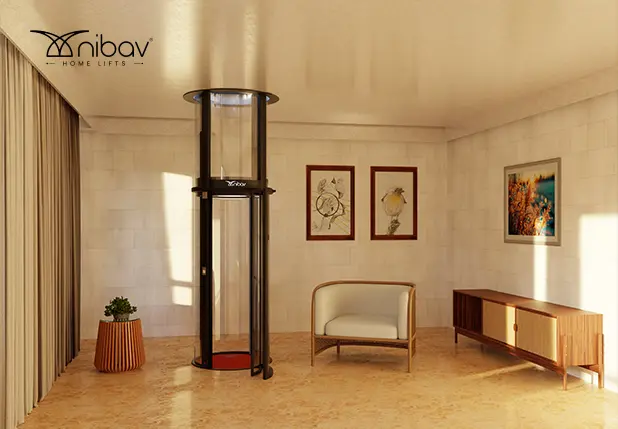
House Lifts for Elderly: Installation Process & Timeline in Indian Homes
Home lifts are helpful for elderly people living in multi-storey houses because they provide safe and easy access between floors. Stairs can lead to weariness, joint strain and an increased chance of falls. As the size of the family grows and homes become larger, it becomes increasingly harder for older family members to navigate between the two floors of their home.
Seniors can maintain their independence and comfort when living in a multi-storey house by adding a home lift. Potential home lift buyers want to know what the home lift installation process will be and how long this will take.
Modern home lifts (especially pneumatic ones made by Nibav) can be installed quickly because they require minimal building modification. Traditional elevators require a lot of modification and construction work. Depending on how long it takes to receive the lift, installation can be completed in as little as 24-48 working hours by Nibav.
This article will explain the steps involved in the installation of a home lift, timelines for the installation, and technical specifications for lifts meant to accommodate elderly family members living in Indian households.
Table of Contents
▾- Why Are House Lifts for Elderly Becoming Popular in India?
- Understanding How Pneumatic Home Lifts Work
- Step-by-Step Installation Process of House Lifts for Elderly
- Installation Timeline for House Lifts in Indian Homes
- Technical Specifications of Modern House Lifts for Elderly
- Factors That Affect Installation Time
- Understanding the Cost of House Lifts for Elderly
- Conclusion
- FAQs
- 1. How long would it take to install elderly lifts for the house?
- 2. Will I need to do some major construction work to put a house lift for the elderly in?
- 3. How much weight capacity do Nibav home lifts for the elderly have?
- 4. Do I need to make anything for the installation of a house lift in my existing home?
- 5. What is the starting price for a house lift for the elderly in India?
Why Are House Lifts for Elderly Becoming Popular in India?
There are many multi-storey residences across India, but as we get older, navigating staircases can become a challenge due to limitations related to ageing. Using a house elevator (also called a home lift) is a quick and safe alternative to using stairs when you need to go from one level of your home to another.
The benefits of house lifts for the elderly include:
– Safe way of moving around
– Lower probability of falling/slipping when navigating stairs
– Better accessibility for the mobility impaired
– Easily transport groceries from one level of your home to another
– Increased resale value
Residential elevators have been designed with a small footprint to enable them to be added to most everybody’s home with minimal alterations.
Understanding How Pneumatic Home Lifts Work
Modern residential elevators for seniors typically use air pressure as opposed to cables or hydraulic power systems to raise and lower themselves. A pneumatic elevator uses an enclosed tube, and the air pressure differential created by a vacuum pump allows the elevator’s cabin to rise and fall smoothly between floors.
The benefits of pneumatic elevators include:
– No counterweight, no cables
– Quiet, smooth rides
– Compact model & quick installation
– Low maintenance
Pneumatic elevators are very suited for home use where little construction may be desirable, as they are compact, and no overhead support structures are required.
Step-by-Step Installation Process of House Lifts for Elderly
There are many steps involved in installing an elevator in your house, which will require detailed engineering analysis to ensure a safe and functional residential lift system.
1. Site Assessment and Preparation
The installation process begins with a detailed site inspection to determine the most suitable location for the home elevator. During this stage, engineers review the layout of the property, floor heights, and the available space to ensure the elevator can be installed efficiently.
Most home elevators require approximately 1000 mm to 1430 mm of floor space, depending on the cabin size and model selected.
The installation team will also assess:
- Number of floors the elevator will serve
- Power supply availability
- Structural compatibility of the building
Once the evaluation is complete, the appropriate lift model and customisation options are finalised to suit the home’s design and functional needs.
2. Preparing Lift Sites
After you’ve planned the lift installations, you are ready to prepare the lift installation sites.
Unlike traditional lift installations, Nibav lifts install without needing:
- Reinforced shafts
- Machine rooms
- Deep pits
The self-supporting structure of the Nibav lift systems means they can be installed easily and quickly and require minimal civil engineering effort to install.
3: Assemble Lift Components
Next the lift structure is installed:
- Cylindrical Shaft Structure
- Lift Cabin
- Control Panels
- Safety Systems
- Electrical Connectors
All components for a modular pneumatic lift can be assembled and placed during installation.
4: Safety Systems Setup
After completing the construction of the elevator, the safety equipment below must be configured, checked and tested:
- Emergency Descent Device
- Mechanical Brakes
- Interlocked Door
- Alarm Systems
- Overload Protection
All of these safety devices must be checked to ensure they are in good working order before the elevator can be used for carrying passengers.
5. Final Testing and Commissioning
Before the installation is completed, technicians conduct final testing to confirm that the lift operates smoothly.
The testing process includes:
- Load testing
- Movement evaluation
- Emergency system checks
Once all safety checks are completed, the lift is ready for daily use.
Installation Timeline for House Lifts in Indian Homes
Modern elevators can be put together much quicker than traditional lifts. Modular lifts can take anywhere from 24-48 working hours depending upon site prep work and building configuration. Unlike conventional elevator systems that may take several weeks or even months to complete, modern home lifts simplify the process through:
- No machine room requirement
- No pit construction needed
- Self-supporting structure
- Pre-engineered modular components
Because of these advantages, modern house lifts offer a faster and less disruptive installation process, making them an ideal solution for homeowners looking to improve accessibility and convenience.
Technical Specifications of Modern House Lifts for Elderly
The technical specifications of house lifts for the elderly should also be a factor when selecting a lift to be installed in their home.
Load Capacity
Home lifts typically have the following load limits:
- Up to 210 kg (2 persons)
- Up to 240 kg (3-4 persons)
Also allows seniors to travel with their carer, if necessary.
Number of Floors
Home lifts have the following maximum number of stops:
- 2-4 (G+3 floors)
- Maximum lift height of 13,500 mm
This is suitable for the majority of homes with multiple levels.
Space Needed
Space-saving Series III compact lifts are:
- Internal cabin: 749 mm-1160 mm
- External cylinder: 935 mm-1343 mm
- They can fit into stairwells, corners or balconies.
Energy Efficiency
Pneumatic lifts use electricity predominantly for going up. They descend by using air pressure and gravity to produce low energy consumption, which makes them good for home use.
Factors That Affect Installation Time
House lifts intended for use by older individuals are generally installed quickly but sometimes take longer due to the following factors:
- Number of floors
- Lift model and cabin size
- Custom options
- Site readiness
- Electrical setup
Good planning and preparation will expedite installation once the lift is installed at the residence.
Understanding the Cost of House Lifts for Elderly
House lifts installed for elderly people in India vary by installation costs, which depend on technology, customisation, and number of floors.
Residential lifts range from ₹11.99 lakhs and up depending on the model and configuration. Higher-capacity or premium models have increased costs, depending on features and design.
For these reasons, many homeowners find the benefits of safety and convenience worth their investment.
Conclusion
Home lifts for elderly persons have revolutionised the way that we think about the safety and access of multiple levels in our homes.
Home lifts have changed a great deal over the years because of new pneumatic technology; now home lifts are installed with less labour than old-fashioned elevators. Typically, pneumatic residential elevators require much less construction than traditional elevator systems, and Nibav offers installation within 24 to 48 working hours.
Once homeowners understand how their home elevator installation works and what will happen during that installation, they can start to make informed decisions about which lift will best meet their specific needs.
Not only does a properly designed residential lift increase access and mobility for elderly people, but these elevators also allow them to stay in their homes much longer without relying on outside assistance or moving to an assisted living facility.
FAQs
1. How long would it take to install elderly lifts for the house?
Residential elevators from Nibav can be installed within 24-48 working hours of work done on the site. However, the duration of the installation of a hydraulic or pneumatic house lift depends upon the complexity of the site as well as the lift type.
2. Will I need to do some major construction work to put a house lift for the elderly in?
No, many modern pneumatic residential lifts do not require construction that may include digging out pits, building shafts or creating machine rooms. Therefore, the installation of a lift can be simple if it is not required to alter the existing structure.
3. How much weight capacity do Nibav home lifts for the elderly have?
Nibav residential lifts for the elderly are able to hold any carer and provide comfortable ground transportation to an individual weighing approximately 210-240 kg.
4. Do I need to make anything for the installation of a house lift in my existing home?
Yes, because modern home elevators are typically designed to be easy to install with limited structural modification to be more easily retrofitted to homes.
5. What is the starting price for a house lift for the elderly in India?
A typical residential elevator is priced around ₹11.99 lakh and will vary based upon selections made by you.
Author
 Sriram
I'm Sriram, part of the Research & Development team. I specialize in home lift technology, working closely on innovations that make our elevators safer, more efficient, and better suited for modern homes. My role involves everything from testing new features to fine-tuning the performance of our latest lift models.

Diya Patel
Useful overview of accessibility and everyday independence at home. I would also compare the space requirements and long-term service arrangements before making a decision.
Rohan Thomas
I appreciate that this topic is explained in a homeowner-friendly way. Accessibility and everyday independence at home can make a real difference when planning a comfortable home for the long term.
Aarav Sengupta
This gives readers a good starting point for evaluating accessibility and everyday independence at home. Clear information about installation needs and ongoing support is especially helpful.
Meera Mishra
Helpful read for anyone researching accessibility and everyday independence at home. I would recommend discussing the home's layout and the family's day-to-day needs with a qualified installer.
Diya Kaur
Thanks for covering accessibility and everyday independence at home. Looking at safety, usability, and maintenance together seems like a sensible way to choose the right solution.