 By shanmugapriya on September 15, 2026
|
By shanmugapriya on September 15, 2026
|



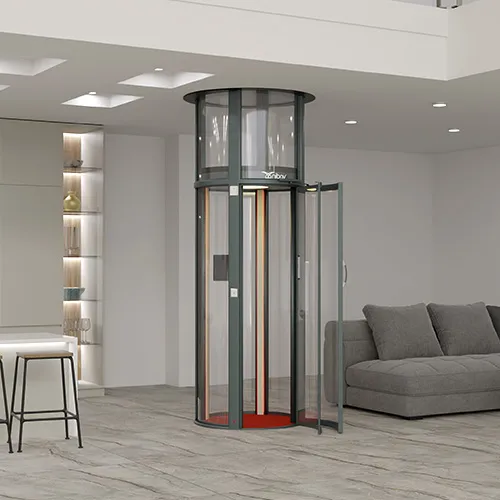
Outdoor Lift for House: A Complete Guide for Homeowners
You’ve measured every internal option and each one fails. The stairwell is too narrow. The living-room corner is committed. Surrendering part of a bedroom on two floors isn’t a trade anyone in the household will accept. And the reason you started looking hasn’t gone away — a parent has stopped going upstairs, or the terrace has become unreachable.
At that point most homeowners land on the same idea: put the lift outside. It’s a sound instinct, because an external shaft costs you no internal floor area at all. But it introduces a set of questions that indoor installations never raise — weather, sun, drainage, wind, and what happens to the equipment over twenty monsoons.
This guide covers what an outdoor lift for house installation actually involves, the factors that determine whether it will last, what it costs, and the specific questions to put to any supplier before you commit.
Table of Contents
▾Why Homeowners Choose an External Installation
Four reasons come up repeatedly, and only the first is about space.
No internal area is lost. This is the decisive one. An external shaft consumes no floor area on any level, which in a compact house — or an expensive one — changes the arithmetic completely.
Terrace and roof access. Many Indian houses have a staircase that stops at the top floor, leaving the terrace reachable only by a narrow flight. An external lift can serve it directly.
No disturbance to a finished or heritage interior. In an older home, or one recently completed, keeping the installation entirely outside the envelope avoids touching walls, floors and finishes.
Simpler placement in a courtyard or setback. Where a house has a side setback, rear yard or internal courtyard, an external position is often more straightforward than anything indoors.
What Changes When the Lift Goes Outside
This is the part most buyers underestimate. An external installation faces conditions an indoor one never does, and each needs an answer from your supplier.
Rain and water ingress. The most important factor. Ask what protects the mechanism, the electricals and the landing doors, and how water is kept out at each landing where the lift meets the building.
Drainage at the base. Water will reach the bottom of an external shaft. Ask where it goes.
Direct sun and heat. UV exposure over years affects polymers, seals and finishes. Ask what the cabin material and external panels are rated for, and how internal cabin temperature is managed in an Indian summer.
Humidity and salt air. In coastal locations — Goa, Kochi, Chennai, Mumbai, Visakhapatnam — salt-laden air accelerates corrosion. Ask specifically about fixings and fasteners, not just the main structure.
Wind loading. A free-standing external structure faces lateral load that an internal one doesn’t. Ask what wind load the structure is designed for and whether tie-backs to the building are required.
Dust and debris. External door tracks collect more than internal ones, which affects both operation and servicing intervals.
Enclosure requirements. Many external installations need a canopy, cladding or partial enclosure. Establish whether that’s included in the quotation or a separate cost — it’s a common source of price surprises.
Approvals. An external structure is more visible to neighbours and to your housing society than an internal one, and may engage setback or building-line rules. Get written consent before ordering.
What an Outdoor Home Lift Costs
Outdoor lift price in India generally starts from a similar base to indoor equivalents — compact residential models begin around ₹11.99 lakhs — but external installation typically adds cost in three places.
Enclosure or weather protection. Canopy, cladding or a partial structure, depending on the design.
Civil and site work. Even where the lift itself is pitless and self-supporting, an external placement usually needs a prepared base, drainage provision and a weatherproof junction where the lift meets the building at each landing.
Electrical routing. Running a supply externally, safely and to a weather-appropriate standard.
The practical advice: get the quotation itemised so you can see the lift, the enclosure and the site work separately. Bundled figures make it impossible to compare suppliers, and they hide where the differences actually are.
The Questions to Ask Any Supplier
Take this list to the conversation. How readily a supplier answers tells you a good deal about whether they’ve done external installations before.
- Is this model rated for external installation, and what is the rating or standard?
- What IP or weather rating applies to the mechanism, controls and doors?
- What enclosure or canopy is required, and is it in the quotation?
- How is water excluded at each landing where the lift meets the building?
- What drainage is required at the base?
- What is the structure’s wind load design, and are tie-backs needed?
- Does warranty cover differ for outdoor placement, and are there exclusions?
- What servicing interval applies outdoors versus indoors?
- In a coastal location, what protects fixings and fasteners specifically?
- Can you show me an external installation you’ve completed in similar conditions?
That last question is the most useful one on the list.
What Nibav Home Lifts Confirms — and What to Verify
Nibav’s air-driven home lifts are widely installed in Indian homes, and several published characteristics are relevant to anyone considering an external position. The table separates what the company documents from what needs confirming for outdoor use specifically.
| Point | Nibav’s published position | For outdoor use |
| Pit required | None | Confirm base and drainage requirement |
| Machine room | None | — |
| Load-bearing shaft | None — self-supporting structure | Confirm wind load design and tie-backs |
| Structure materials | Aluminium and galvanised steel, corrosion-resistant | Confirm fixings and fasteners for coastal air |
| Cabin and shaft | High-strength polycarbonate, panoramic | Confirm UV rating for direct sun |
| Clear space required | From ~1,010 mm; 1,430 mm for Max variants | Same footprint applies |
| Capacity | 210 kg standard / 240 kg Max | — |
| Stops and travel | Up to 4 stops (G+3), 13,500 mm | Confirm terrace-level landing arrangement |
| Power supply | Single-phase, ~3.7 kVA ascending, zero descending | Confirm external routing standard |
| Installation | CKD assembly, typically 24–48 working hours | Confirm added site work for external placement |
| Certification | TÜV NORD certified; ISO 14001 and ISO 45001 | Confirm whether it extends to external installation |
| Weather / IP rating | Not stated in published material | Confirm directly |
| Outdoor warranty terms | Not stated in published material | Confirm directly |
| Range starts at | ₹11,99,000* | Enclosure and site work additional |
Being straightforward about this: several attributes point in a useful direction for external placement — corrosion-resistant materials, a self-supporting structure that needs no load-bearing walls, and no pit to flood. But an outdoor rating is a specific engineering claim, and it isn’t one Nibav states publicly. Ask for it in writing rather than inferring it, and treat any supplier who answers vaguely with caution.
The Sensible Next Step: A Site Feasibility Visit
For an external installation the site visit matters more than for any indoor one, because the answer depends on conditions no brochure can address — where water goes, how much sun the position takes, how exposed it is, and how the lift will meet the building at each landing.
Nibav conducts a technical feasibility assessment at your property before purchase, and operates 40+ experience centres across India within a 55+ global network where the models can be seen and ridden. Ask the engineer specifically about external placement during that visit, and request the findings in writing.
Frequently Asked Questions
1. Can a home lift be installed outside the house?
External installation is possible with lifts designed and rated for it, and it’s chosen mainly because it costs no internal floor area. What determines success is weather protection, drainage, UV exposure, wind loading and how the lift meets the building at each landing. Always ask a supplier to confirm in writing that the specific model is rated for outdoor installation.
2. Is an outdoor home lift weatherproof?
That depends entirely on the model and its rating — it isn’t a property you should assume. Ask for the IP or weather rating covering the mechanism, controls and doors, what enclosure is required, and whether warranty terms change for external placement.
3. How much does an outdoor lift cost?
Compact residential models in India start from around ₹11.99 lakhs excluding taxes, but external installation typically adds cost for enclosure or cladding, base and drainage work, and weather-appropriate electrical routing. Ask for the quotation itemised so you can see each element separately.
4. Does an outdoor lift need a pit?
Pitless designs place the drive above the cabin, so no pit is needed for the mechanism. An external position may still require a prepared base and drainage provision, which is a different question — confirm both.
5. Will an outdoor lift work for terrace access?
Often yes, and it’s one of the commonest reasons homeowners choose external placement, since many houses have a staircase that stops short of the terrace. Confirm the landing arrangement at terrace level and the weather junction at that point.
6. Do I need permission for an external home lift?
More likely than for an internal one, since the structure is visible and may engage setback or building-line rules. Obtain written society or association consent before ordering, and check the municipal position for your location.
Author
No comments yet.