
 By shanmugapriya on July 30, 2026
|
By shanmugapriya on July 30, 2026
|

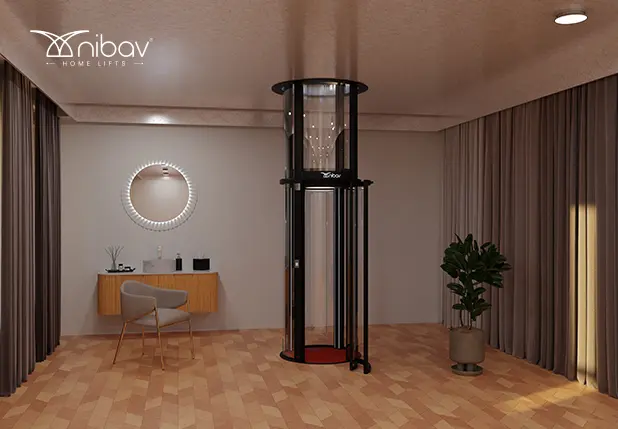
How Much Do Vacuum Lifts Cost in India? Pricing and Factors Explained (2026)
The price question is the one that stops most Indian homeowners from properly investigating vacuum home elevators. They’ve heard a number — sometimes too low to be believable, sometimes too high to be practical — and made a decision based on incomplete information before the real conversation even started.
The vacuum lift price in India in 2026 is more accessible than most people assume, but the number requires context to be useful. Unit price alone tells you very little. The number that matters is the total installed cost — including or excluding civil work, depending on the technology — across the floor count and model tier that actually matches your household’s needs.
This guide gives you that complete picture: honest pricing by lift model and floor count, the factors that affect the final figure, and how to evaluate any quote you receive against a transparent benchmark.
Table of Contents
▾- What Determines Vacuum Elevator Cost in India
- Vacuum Home Lifts Price in India: 2026 Model-by-Model Guide
- Running Costs: What a Vacuum Lift Costs to Operate in India
- How to Evaluate Any Vacuum Lift Quote in India
- Why Nibav Offers India’s Most Transparent Vacuum Elevator Pricing
- Why Customers Across India Choose Nibav for Vacuum Home Lifts
- Frequently Asked Questions: Vacuum Lift Price in India
- 1. What is the starting price for a vacuum elevator in India?
- 2. What affects the final cost of a vacuum elevator in India?
- 3. Are vacuum lifts cheaper than hydraulic elevators in India?
- 4. What are the running costs of a vacuum lift in India?
- 5. How much does a vacuum lift for a 3-floor home cost in India?
What Determines Vacuum Elevator Cost in India
Several variables shape the final price of a vacuum elevator installation in India. Understanding them helps you evaluate whether a quote is complete and whether it represents good value.
- Model tier: The most significant price variable within the vacuum elevator category. Entry-tier models deliver full safety certification and standard cabin quality. Mid-tier adds Motor 2.0, Quiet 3.0, Suspension 2.0, touchscreen controls, and premium cabin finishes. Flagship tier adds automatic doors, smart emergency communication, laser-engraved personalisation, screwless exterior, and 25-year warranty on core components.
- Cabin size (Standard vs Max): Max models with wider cabins (1160–1240 mm internal diameter) cost approximately ₹3 lakhs more than Standard models at the same tier for G+1 installations. This premium delivers 400–490 mm wider internal space and 30 kg additional capacity.
- Number of floors: Each additional floor adds approximately ₹1,00,000–₹1,50,000 depending on the model. G+2 adds to G+1; G+3 adds further.
- Customisation: Standard finishes install within base pricing. Premium customisation — specific colour and finish combinations, cabin interior upgrades — adds incrementally.
- Civil work: This is the critical differentiator between vacuum and traditional elevator pricing. Vacuum elevators require no pit, no machine room, and no structural shaft walls. The quoted price is the all-in price. Traditional systems add ₹4–8 lakhs in civil work to any unit price quoted.
Vacuum Home Lifts Price in India: 2026 Model-by-Model Guide
All prices are MRP starting rates, all-inclusive with no civil work additions, excluding taxes:
Entry Standard (210 kg, compact cabin):
- G+1: ₹11,99,000*
- G+2: ₹12,99,000*
- G+3: ₹14,99,000*
Entry Max (240 kg, wider accessible cabin):
- G+1: ₹14,99,000*
- G+2: ₹17,69,000*
- G+3: ₹18,59,000*
Mid Standard (210 kg, Motor 2.0, Quiet 3.0, premium finishes):
- G+1: ₹16,69,000*
- G+2: ₹17,69,000*
- G+3: ₹19,69,000*
Mid Max (240 kg, wider cabin, Motor 2.0, Quiet 3.0, 77% ROS):
- G+1: ₹19,49,000*
- G+2: ₹21,19,000*
- G+3: ₹23,29,000*
Premium Standard (210 kg, AutoGlide™ doors, SmartConnect™, CoreShield™ 25-yr warranty):
- G+1: ₹19,49,000*
- G+2: ₹20,49,000*
- G+3: ₹22,49,000*
Premium Max (240 kg, widest cabin, all flagship features):
- G+1: ₹22,49,000*
- G+2: ₹23,99,000*
- G+3: ₹26,09,000*
Running Costs: What a Vacuum Lift Costs to Operate in India
The purchase price is a one-time event. Running costs accumulate over 15–20 years of daily use.
Annual Maintenance Contract (AMC): Standard AMC Charges for lifts range between 3-5% of lift prices, scope of contract coverage, location.
- AMC: Standard AMC Charges for lifts range between 3-5% of lift prices, scope of contract coverage, location.
How to Evaluate Any Vacuum Lift Quote in India
- Step 1: Confirm it’s all-in. Ask specifically: does this price include the complete installed product with no civil work additions? Vacuum elevator quotes should be all-in. If there are additions, list them explicitly.
- Step 2: Verify certification. Ask for the TÜV NORD Certificate document — certificate number and issuing authority. Not the logo. The document.
- Step 3: Confirm the model spec. Cross-reference the cabin diameter, capacity, motor generation, and safety features against the specification sheet for the named model.
- Step 4: Get the AMC structure in writing. Annual cost, what’s covered, what callouts cost separately, response time commitment.
- Step 5: Ask about the warranty. Which components, for how long, is labour included, what are the exclusions?
Why Nibav Offers India’s Most Transparent Vacuum Elevator Pricing
Nibav’s pricing reflects the true value of a complete residential elevator solution, with significantly lower civil work requirements than traditional elevators.
Because every Nibav home lift is pitless and machine-room-free, homeowners avoid extensive structural modifications, helping reduce overall project costs while ensuring a faster, more efficient installation.
From ₹11,99,000* for the entry-level G+1 model to ₹26,09,000* for the premium Max G+3 configuration, Nibav offers one of India’s most comprehensive TÜV NORD Certified vacuum elevator ranges. One brand, one technology platform, and one consistently high standard of safety, engineering, and performance across every model.
Why Customers Across India Choose Nibav for Vacuum Home Lifts
The feedback Nibav consistently receives from customers across India clusters around three things: the price was what they were told it would be, the installation took exactly as long as promised, and the product has performed exactly as expected across years of daily use.
In a market where post-contract surprises, installation overruns, and reliability issues are common enough to have shaped buyer caution, this consistency is genuinely distinctive. Nibav’s 10,000+ installations in India and internationally provide the track record that backs these claims — not projected performance, but demonstrated performance across households in Chennai, Bangalore, Mumbai, Hyderabad, Delhi, and beyond.
For Indian homeowners who have been burned by unclear pricing or disappointing post-purchase performance in other home improvement categories, Nibav’s combination of transparent all-in pricing, 24–48 working hour installation, TÜV NORD Certification, and long-term reliability makes it the brand that earns genuine loyalty rather than just the next sale.
Frequently Asked Questions: Vacuum Lift Price in India
1. What is the starting price for a vacuum elevator in India?
₹11,99,000* for a G+1 all-in installation (entry-level standard model). This is a complete, certified installation with no civil work additions.
2. What affects the final cost of a vacuum elevator in India?
Model tier, cabin size (Standard vs Max), number of floors, and any customisation. Civil work is not a variable for vacuum elevators — it doesn’t exist.
3. Are vacuum lifts cheaper than hydraulic elevators in India?
On total installed cost (including hydraulic civil work of ₹4–8 lakhs), vacuum elevators are frequently comparable or more affordable. Unit price comparisons that exclude civil work from hydraulic quotes are misleading.
4. What are the running costs of a vacuum lift in India?
A vacuum lift in India generally has lower running costs because it uses air pressure instead of hydraulic oil and requires less maintenance. Electricity consumption is also relatively low, with routine servicing and occasional replacement of wear parts being the main ongoing expenses.
5. How much does a vacuum lift for a 3-floor home cost in India?
For a G+2 installation: from ₹12,99,000* (entry standard) to ₹23,99,000* (premium Max). For G+3: from ₹14,99,000* to ₹26,09,000*.

Karthik R
This was a very useful guide for understanding vacuum lifts cost in India. I especially liked how the article explained the difference between the model price and the total installed cost. The details about cabin size, number of floors, maintenance, and civil work make it much easier for homeowners to compare options before requesting a quotation.
Ananya S
I was searching for information about vacuum lifts cost and found this article quite informative. The model-wise pricing and explanation of Standard and Max options gave me a much clearer idea of what influences the final price. The section on running expenses was also helpful because installation cost is only one part of owning a home lift.
Pradeep Kumar
A practical article for anyone planning to install a vacuum home elevator. Instead of simply giving a starting price, this guide explains the factors that can increase the overall cost, including floor count, cabin size, customisation and maintenance. The explanation of vacuum lifts cost in India makes the pricing much easier to understand and compare.
Meena Krishnan
This blog answered several questions I had about home elevator pricing. I found the explanation of why civil work matters particularly useful, as many buyers may only look at the equipment price when comparing elevators. The information about electricity consumption and AMC costs also gives a more realistic picture of the long-term expense involved.
Suresh Babu
The pricing breakdown in this article is presented in a very straightforward way. Knowing that vacuum lifts cost can vary according to model, capacity, floor count and features helps avoid making a decision based only on an advertised starting price. I also appreciated the checklist for evaluating quotations, especially the points about certification, warranty and AMC.
Divya Nair
A well-explained guide for homeowners who are considering a vacuum lift for their property. The comparison of different model tiers and floor configurations gives a useful reference point when researching vacuum lifts cost in India. I also liked that the article discusses operating and maintenance expenses instead of focusing only on the initial purchase price.