
Self-Sufficient System for Residential Elevators


Find the perfect home lift model for your space by selecting your city and floor levels.
What’s a Self-Supporting Structure?
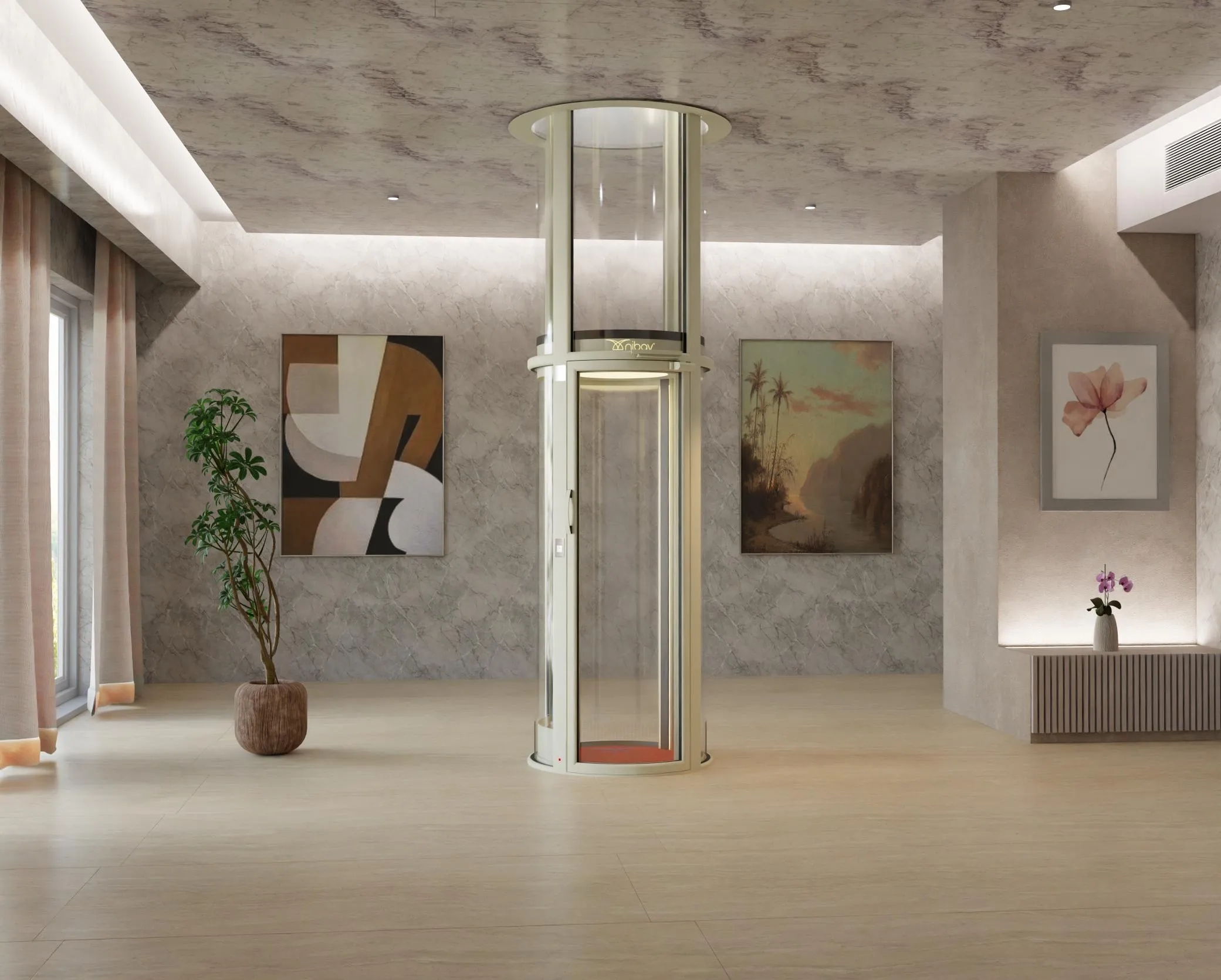
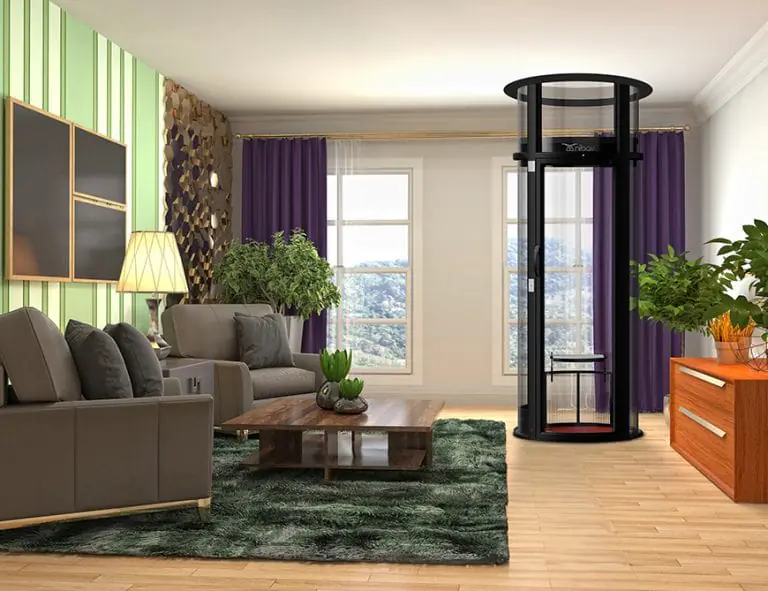
A self-supporting structure is an elevator that does not require your house to support it. The elevator supports itself.
What Conventional Elevators Require
To support an elevator, a conventional elevator requires:
- A lot of strong walls
- A concrete shaft (the elevator can only descend through the middle of a concrete shaft)
- Beams/columns to support the weight of the elevator
How a Self-Supporting Elevator Is Different
In a self-supporting elevator, all of these items are incorporated into the elevator.
Self-Supporting Elevators Have Their Own Strong Frames
A self-supporting elevator has a strong frame that supports the entire weight of the elevator cabin.
- The frame keeps the elevator stable as it moves.
- The frame does not rely on your house's walls, floors or ceilings.
- Instead of depending on your home for stability, the elevator operates independently.
Advantages of Self-Supporting Elevators
Since the self-supporting elevator does not require any major structural changes or concrete, it can be easily added to existing homes.
You do not need to make any structural changes to your home to install the self-supporting elevator, so installation is quicker, easier and cleaner.
Why You Should Care
Typically, a traditional residential elevator will require:
- A deep pit
- A reinforced concrete shaft
- Supports such as load-bearing walls
- Substantial civil construction
For some homeowners, especially those living in older existing homes, this creates difficulties in obtaining a residential elevator installed.
The self-supporting system addresses this challenge directly.
Top Reasons You Should Care
1. Minimal civil work
A self-supporting system does not require the modification of your existing house.
2. Less time required for installation
There is no brick or concrete work needed to construct or equip the elevator shaft, nor is there additional equipment needed to install a machine room. Because of this, the timelines for installation can be greatly reduced.
3. Ideal for homes that were not originally designed to be used with elevators
In a self-supporting system, homes are able to retrofit and accommodate elevators without significant difficulty.
4. Better overall performance for the home
The self-supporting system allows the elevator to be able to function without adding structural stress on the floor, wall, or ceiling above. Cleaner, less noisy, and less impactful installation process.
A self-supporting structure for home elevators provides a more practical, future-ready mobility option, and less of a luxury.
Who Would Benefit From a Self-Supporting Elevator
Self-supporting home elevators are an ideal solution for many homeowners, such as:
- Families living in multiple-story houses at this time
- Older adults who would prefer to live in their own home as they age
- Houses with residents who use a wheelchair or have other mobility-related problems
- Duplex houses, villas, and small urban houses
- Individuals looking to increase accessibility without having to go through the stress of renovating their homes
- Individuals planning long-term convenience and increasing property value
If you want an elevator that will fit seamlessly into your existing space, and not force your home to change, a self-supporting structure is the best choice.
Self-Supporting Home Elevator Examples from Nibav
All Nibav air-driven home elevator models are built upon a self-supporting framework.
These include the following:
- Nibav Models Series III
- Nibav Models Series III Max
- Nibav Models Series IV
- Nibav Models Series IV Max
- Nibav Models Series V
- Nibav Models Series V Max
Each of these models can function without the need for a pit, shaft, or machine room, making them a perfect fit for both new constructions and existing homes.
Self-Supporting Home Elevator Technical Specifications
From a design standpoint, Nibav’s air-driven home elevators employ a self-supporting structure that includes the following:
- A fully integrated vertical frame that carries the complete weight of the elevator
- An even distribution of the weight between the cabin and the base
- No reliance on load-bearing walls or RCC shafts
- Built specifically for residential floor heights, and for indoor environments
- Careful and precise balance and stability of well-engineered components
- Compatibility to be utilized as pneumatic air-driven technology
The structure will remain stable during operation, ensuring smooth movement, controlled stops, and consistent performance over time.
Common Self-Supporting Elevator Questions


