
 By shanmugapriya on July 23, 2026
|
By shanmugapriya on July 23, 2026
|



Why Glass Door Elevators Are Trending in Chennai Villas (2026)
There’s a quiet but unmistakable shift happening in how Chennai’s villa owners think about home elevators. Five years ago, a residential lift was a purely functional consideration — something you installed for an elderly parent or because carrying things between floors had become exhausting. The design of the lift was an afterthought. You accepted what was available and moved on.
Today, the conversation is completely different. Chennai homeowners — particularly in the premium villa and duplex markets along ECR, OMR, and the established residential pockets of Adyar, Besant Nagar, and Kilpauk — are asking a different set of questions. Not just “will it work?” but “will it look like it belongs here?”
The glass door elevator has become the answer to that second question. Transparent, architecturally integrated, and now available at price points and installation timelines that make them a realistic choice for the Chennai villa market — not just an aspirational one. This is why they’re trending, and what’s actually driving the demand.
Table of Contents
▾- Why Glass Door Elevators Are Gaining Ground in Chennai’s Villa Market
- The Design Shift: From Functional Addition to Architectural Feature
- What’s Making Glass Door Elevators Practically Accessible Now
- The Investment Case: Glass Door Elevators and Chennai Property Values
- What Chennai Villa Buyers Should Actually Look for in a Glass Door Elevator
- Why Nibav Home Lifts Leads the Glass Elevator Trend in Chennai
- Frequently Asked Questions
- 1. Why are glass door elevators more popular than enclosed lifts in Chennai villas?
- 2. What makes a glass door elevator suitable for Chennai’s climate?
- 3. Do glass door elevators require major construction in a Chennai villa?
- 4. What is the price of a luxury glass door elevator in Chennai?
- 5. Does a glass door elevator add value to a Chennai villa?
Why Glass Door Elevators Are Gaining Ground in Chennai’s Villa Market
Chennai’s premium villa market has matured significantly. The homeowners investing in properties along ECR and in Sholinganallur, Neelankarai, and Perungudi today are not the same buyers as a decade ago. Interior design is treated as seriously as structural planning. Architects and interior designers are involved from early stages. The home is a considered, curated environment — and every element within it is evaluated through that lens.
A villa lift in Chennai that looks like it was borrowed from a commercial building has always created cognitive dissonance in this context. It works. But it doesn’t belong. And in a segment where belonging — the sense that every element of the home was chosen rather than accommodated — is exactly what buyers are paying for, that mismatch matters.
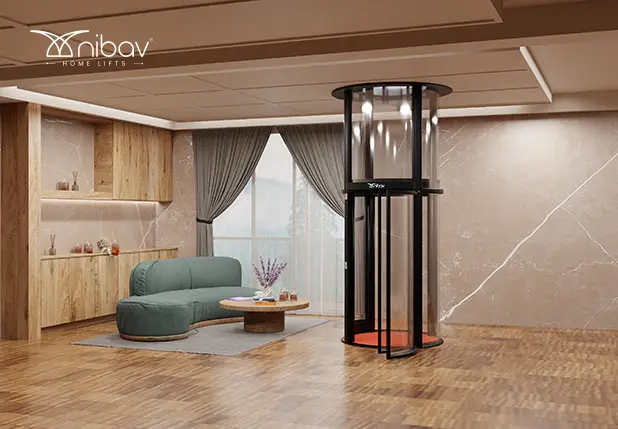
Glass door elevators resolve it. The transparent shaft doesn’t divide the interior — it becomes part of it. Light still travels between floors. Sightlines remain intact. And the lift, rather than interrupting a well-designed space, can be positioned as its centrepiece.
Target audience driving this trend:
- Villa owners aged 40–65 in Chennai’s premium residential corridors
- NRI families building or renovating properties for parents in Chennai
- Architects and interior designers specifying lifts for luxury home projects
- Real estate developers in Chennai’s premium villa segment using lifts as a differentiator
- Families with elderly parents in multi-floor homes where stair use is increasingly challenging
The Design Shift: From Functional Addition to Architectural Feature
The most significant shift behind the glass door elevator trend in Chennai is not technical — it’s conceptual. Home elevators have moved from the category of “necessary infrastructure” into the category of “deliberate design decision.”
This matters because it changes how the purchase is evaluated. A functional infrastructure purchase is evaluated primarily on reliability and price. A design decision is evaluated on how it contributes to the home’s overall aesthetic — and in that framework, a transparent, frameless, panoramic glass elevator performs entirely differently from an enclosed box in a masonry shaft.
How Chennai villa owners are integrating glass elevators into their design:
As the staircase centrepiece: Many Chennai villas have an open staircase void that runs through the home’s vertical core. A glass elevator placed within this void — visible from the entrance, the living area, and each landing — becomes the visual anchor of the home’s interior rather than a concealed utility.
As a light conductor: Transparent elevator shafts allow natural light to move between floors in ways that opaque shafts block entirely. For Chennai homes where natural light management is a constant design consideration, this is a meaningful functional benefit beyond aesthetics.
As a statement of premium specification: In Chennai’s luxury home elevator market, a glass door elevator with premium finishes — leather cabin interiors, metallic shaft exterior, automatic doors, ambient lighting — signals a level of specification that comparable homes with conventional lifts simply cannot match.
What’s Making Glass Door Elevators Practically Accessible Now
The trend isn’t just aesthetic. The practical barriers that previously made glass door elevators a niche luxury have reduced dramatically in the last five years.
- Installation no longer requires months of construction. Modern air-driven glass elevators — built on vacuum (pneumatic) technology — are pitless and machine-room-free. The transparent polycarbonate cylinder is self-supporting and installed in 24–48 working hours without structural changes to the existing building. For a Chennai villa owner who doesn’t want their home turned into a construction site, this is a genuine game-changer.
- Pricing has become realistic for the premium villa segment. Entry-level glass door elevators in Chennai now start from approximately ₹11,99,000* for a G+1 all-in installation. Premium models with the full design and smart feature package are available in the ₹19,49,000–₹26,09,000* range. For a villa that has cost ₹1–3 crore to build and furnish, this investment is proportionate.
- The technology is certified. The concern that glass elevators were somehow less safe than conventional enclosed lifts has been addressed by independent certification. TÜV NORD Certified residential glass elevators meet European safety standards — verified by a third party, not claimed by the manufacturer.
- Maintenance has simplified. Air-driven glass elevators have no hydraulic fluid, no cables, and no fluid seals — the components most likely to need attention in Chennai’s humid coastal environment.
The Investment Case: Glass Door Elevators and Chennai Property Values
Beyond aesthetics and daily convenience, Chennai villa owners are increasingly evaluating glass door elevators as a property investment decision — and the logic holds up.
- Expanded buyer pool at resale. A villa with a certified glass door elevator appeals to families with elderly parents, NRI buyers investing for independent-living parents, buyers in their 40s planning ahead, and anyone who has experienced a glass elevator abroad and considers it a standard premium home feature. This is a meaningfully larger buyer pool than the same villa without a lift.
- Premium positioning versus comparables. In Chennai’s villa resale market, a glass elevator is still differentiating — not yet standard in the way it’s becoming in some international markets. A home with one commands stronger positioning against comparable listings and supports premium pricing.
- NRI investment logic. Chennai’s NRI buyer segment — significant in the ECR and premium suburban markets — has specific priorities when purchasing for parents: safe, modern, globally certified, and low-maintenance. A TÜV NORD Certified glass door elevator with a 25-year warranty on core components checks every box. NRI buyers familiar with home elevators from the US, UK, Australia, or Singapore view them as a standard amenity rather than an unusual addition.
What Chennai Villa Buyers Should Actually Look for in a Glass Door Elevator
The glass elevator trend has brought an increase in suppliers, not all of whom offer comparable quality. Here’s what to evaluate:
- Material quality: High-strength polycarbonate is superior for Chennai’s climate. Ask specifically which material is used for the shaft cylinder and cabin walls.
- Certification: TÜV NORD Certification from the named European authority is the standard to verify. Ask for the certificate document, not just the logo.
- Installation requirements: A genuinely pitless, machine-room-free glass elevator installs in 24–48 working hours. Any quote requiring weeks of civil construction is signalling a different technology category with hidden cost additions.
- Door design: Automatic sensor-based doors are the premium standard. Manual doors on a glass elevator undercut the luxury positioning the product is meant to deliver.
- Finish options: Metallic, textured, hydro-gloss exterior finishes for the shaft; leather cabin interiors; ambient and mood lighting; custom engraving — these are the details that determine whether the lift becomes a design feature or just a transparent box.
- After-sales service in Chennai: A brand with a local presence in Chennai means faster installation scheduling, quicker service response, and an AMC structure that reflects actual local costs. Ask where the nearest service team is based.
Why Nibav Home Lifts Leads the Glass Elevator Trend in Chennai
Nibav’s air-driven vacuum elevator range represents exactly what the Chennai villa market’s glass elevator trend demands — transparent panoramic cabins, premium finish options, TÜV NORD Certification, 24–48 hour installation, and no civil construction required.
The Series V and Series V Max are the flagship glass door elevators in the range — with ZeroTrace™ screwless exterior, AutoGlide™ automatic sensor doors, HeartLine™ laser-engraved cabin personalisation, SkyMark™ illuminated ceiling, and CoreShield™ — a 25-year warranty on the motor and vacuum seal. Starting from ₹19,49,000* for the Series V (G+1) and ₹22,49,000* for the Series V Max (G+1).
Nibav is headquartered in Chennai with a working experience centre where you can step into actual models before deciding — the most useful step in evaluating any glass elevator for your home.
Frequently Asked Questions
1. Why are glass door elevators more popular than enclosed lifts in Chennai villas?
Glass door elevators preserve the visual openness of premium Chennai interiors — light passes through, sightlines remain intact, and the lift becomes a design feature rather than a visual obstruction. For villa owners who have invested heavily in interior design, this is a meaningful distinction.
2. What makes a glass door elevator suitable for Chennai’s climate?
Models using high-strength polycarbonate shafts — rather than standard glass or metal enclosures — are best suited to Chennai’s coastal humidity and heat. Polycarbonate is UV-stabilised, impact-resistant, and does not corrode or cloud over time. Air-driven technology eliminates the fluid-based components that degrade fastest in humid conditions.
3. Do glass door elevators require major construction in a Chennai villa?
Not with modern air-driven vacuum technology. These elevators are pitless, machine-room-free, and self-supporting — installing in 24–48 working hours without structural changes. Traditional hydraulic alternatives require pit and machine room construction, adding ₹4–8 lakhs and weeks of work to the project.
4. What is the price of a luxury glass door elevator in Chennai?
Luxury glass door elevators from Nibav start at ₹11,99,000*. The final price depends on your home, preferred model, and customisation options. Contact our team for a personalised quote and expert guidance on choosing the ideal home lift for your space.
5. Does a glass door elevator add value to a Chennai villa?
Yes — particularly in the premium villa markets along ECR, OMR, and the established residential areas of South Chennai. A certified glass door elevator expands the buyer pool, supports premium pricing versus comparables, and is increasingly viewed as a standard feature by NRI buyers and elderly-accessibility-focused purchasers.
Author
 Sriram
I'm Sriram, part of the Research & Development team. I specialize in home lift technology, working closely on innovations that make our elevators safer, more efficient, and better suited for modern homes. My role involves everything from testing new features to fine-tuning the performance of our latest lift models.

Vignesh Balasubramanian
The explanation of how glass elevators can become part of the home’s architecture was interesting. Using one in an open staircase area could preserve natural light and make the elevator feel more integrated with the overall interior design.
Aishwarya Rajendran
I found the section about installation particularly useful. The possibility of having a pitless, machine-room-free lift installed within 24–48 working hours could be very helpful for homeowners who don’t want extensive construction in an existing villa.
Mohan Venkataraman
The points about material quality and certification are worth considering before buying a glass elevator. Checking the actual shaft material and asking for certification documents seems much more reliable than judging a product only from its appearance.
Gayathri Chandrasekar
The discussion about elderly parents and multi-generational families stood out to me. A home elevator can provide easier access between floors while also being designed as part of the villa rather than looking like an added utility.