 By Sriram on February 11, 2026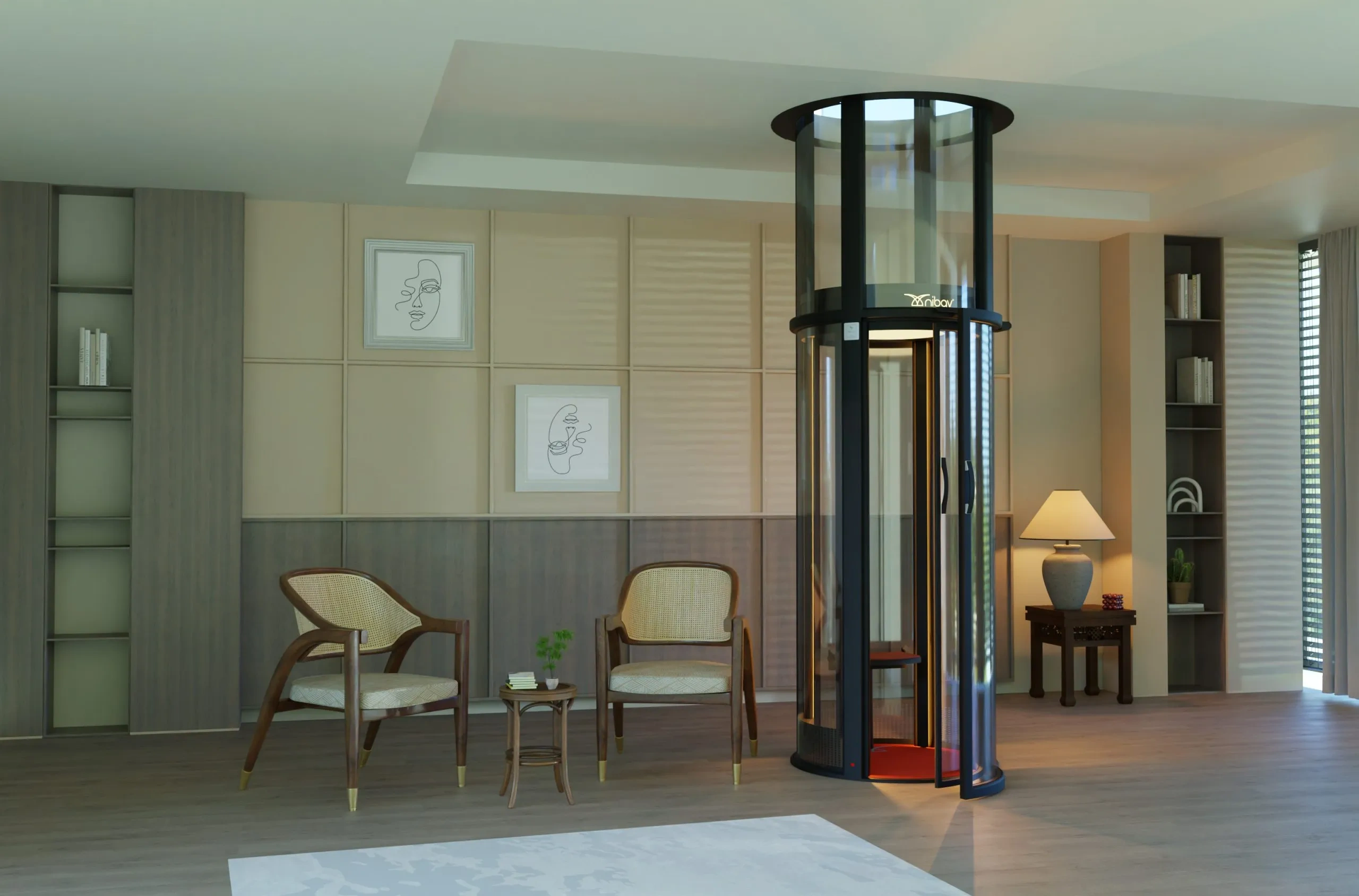
As multi-story homes become more common across Indian cities and suburban developments, homeowners are increasingly looking for practical ways to improve vertical mobility. Daily stair use can be physically demanding for seniors, inconvenient for families with children, and challenging for people with mobility concerns. Today, home elevators are no longer seen as luxury features but as long-term investments in accessibility, comfort, and safety.
Choosing the best home elevator for a multi-story house in India depends on several technical and lifestyle factors, including available space, installation complexity, energy efficiency, and overall lift cost for three floors. With modern advancements in residential elevator technology, compact designs, reduced civil work requirements, and intelligent safety systems are now well suited to Indian housing layouts.
Table of Contents
▾- Why Multi-Story Homes in India Are Adopting Home Elevators
- What Types of Home Elevators Are Available in India
- How Pneumatic Home Elevators Suit Indian Residential Design
- Which Home Elevator Models Are Best for Three-Floor Houses
- What Determines the Lift Cost for 3 Floors in India
- Home Elevator Price Table for India (Nibav Models)
- Why Installation Time Matters for Indian Homes
- How Safety Features Define the Best Home Elevators
- How Home Elevators Improve Long-Term Living
- Why Pneumatic Elevators Are Becoming the Preferred Choice
- How to Choose the Best Home Elevator Company
- Frequently Asked Questions
- Conclusion
Why Multi-Story Homes in India Are Adopting Home Elevators
Urbanization and increasing land prices have encouraged vertical residential construction across India. Duplex houses, triplex homes, and G+2 or G+3 villas are now common in metropolitan and developing cities. While this architectural approach maximizes land use, it also introduces mobility challenges inside the home.
Home elevators allow seamless movement between floors and significantly enhance daily living. They support aging in place for elderly residents, reduce physical strain, and improve safety for families with children. Technically, modern residential elevators for homes are engineered to support vertical travel heights of up to 13,500 mm (G+3 floors) with load capacities ranging from 210 kg to 240 kg, making them suitable for regular household use.
Compact residential elevators also eliminate the need for pits and machine rooms, allowing installation directly on finished flooring. This makes it easier for Indian homeowners to integrate an elevator without extensive structural redesign, preserving valuable living space while improving long-term accessibility.
What Types of Home Elevators Are Available in India
The Indian residential elevator market offers different systems based on operating technology and installation requirements. Hydraulic elevators use oil-driven pistons and typically require a pit depth of 150 to 300 mm, a machine room, and reinforced shafts. Traction elevators operate using cables and counterweights and require overhead clearance and permanent shafts.
Pneumatic elevators, also known as vacuum elevators, use air pressure differences to move the cabin vertically inside a cylindrical tube. This technology eliminates the need for hydraulic oil, counterweights, and heavy structural shafts. Pneumatic systems generally require between 1,000 mm and 1,430 mm of clear floor space, depending on cabin size, and operate as self-supporting structures.
For multi-story homes, the ideal elevator type should offer ease of integration into existing layouts, reliable operation, and lower long-term maintenance. Pneumatic elevators reduce mechanical complexity by removing pulleys, oil reservoirs, and counterweights, which lowers service requirements and improves long-term performance.
How Pneumatic Home Elevators Suit Indian Residential Design
Pneumatic home elevator company are particularly compatible with Indian housing designs. They are self-supporting and can be installed directly on finished flooring without requiring pits or machine rooms. This allows them to be placed in stair voids, living room corners, or central areas of the home.
Most pneumatic systems support vertical travel up to three or four levels (G+3), which aligns well with typical villa and duplex layouts in India. Load capacities usually range from 210 kg for standard models to 240 kg for wheelchair-accessible models, enabling two to four passengers per trip.
Energy efficiency is another advantage. Pneumatic elevators consume approximately 3.7 kVA of electricity during ascent and use no electricity during descent, as gravity assists the downward movement. This lowers overall power consumption and allows operation on standard single-phase residential electrical supply.
Which Home Elevator Models Are Best for Three-Floor Houses
For homes with three floors, selecting the right elevator involves balancing cabin size, load capacity, and spatial limitations. Compact models are ideal for homes with limited floor area and narrow staircases, while larger cabins are more suitable for families requiring wheelchair access or higher daily usage.
Smaller models typically feature internal cabin diameters between 749 mm and 830 mm, with clear space requirements starting from around 1,010 mm. Larger accessibility-focused models offer cabin diameters between 1,160 mm and 1,240 mm with a 240 kg rated capacity.
Modern pneumatic home elevators provide multiple size options so homeowners can match the elevator to their layout instead of modifying the home to suit the elevator. Smaller cabins occupy just over one square meter of floor space, while larger cabins require slightly more room but deliver greater comfort and usability.
What Determines the Lift Cost for 3 Floors in India
The home lift cost for three floors depends on several technical and design factors. The primary influence is the type of elevator system selected. Pneumatic elevators typically reduce civil construction expenses because they eliminate the need for pits, shafts, and machine rooms.
Cabin size also affects cost. Models designed for 210 kg capacity are generally more economical than 240 kg wheelchair-ready models with larger cabin diameters. Travel height and number of stops influence pricing as well, since G+3 configurations require additional control components.
Customization options such as cabin finishes, door designs, and control interfaces can further affect pricing. Homeowners should also consider long-term operating expenses, including energy usage per ride and routine maintenance.
Home Elevator Price Table for India (Nibav Models)
| Model Series | Load Capacity | Suitable Use | Price Range (INR)* |
| Series III | 210 kg | Compact homes | ₹ 11,49,000 – ₹ 14,49,000 |
| Series III Max | 240 kg | Wheelchair-ready small homes | ₹ 14,49,000 – ₹ 18,09,000 |
| Series IV | 210 kg | Mid-size homes | ₹ 15,49,000 – ₹ 18,49,000 |
| Series IV Max | 240 kg | Premium family homes | ₹ 18,49,000 – ₹ 22,09,000 |
| Series V | 210 kg | Luxury residences | ₹ 19,49,000 – ₹ 22,49,000 |
| Series V Max | 240 kg | High-end accessibility homes | ₹ 22,49,000 |
*Prices vary based on customization and site conditions.
Why Installation Time Matters for Indian Homes
Installation time is critical for homeowners living in their houses during construction. Traditional elevators often require weeks of civil work involving excavation and shaft construction.
Pneumatic home elevators use modular components assembled on site. Since no pit or machine room is required, installation is usually completed within three to five working days after site preparation. This minimizes dust, noise, and disruption inside the home and allows families to remain on-site during installation.
How Safety Features Define the Best Home Elevators
Safety is a core requirement for residential elevators. Modern elevator systems include multiple independent safety features that work together to prevent accidents.
These include dual braking mechanisms, door interlocks that prevent opening unless the cabin is level, and smart overload sensors calibrated to 210 kg or 240 kg. Emergency descent systems allow the cabin to return safely to the lowest floor during power failure without backup power.
Precision landing technology aligns the cabin within 1 to 2 mm of floor level, reducing trip hazards. Soft start and stop algorithms reduce vibration and mechanical stress, improving comfort and extending component life.
How Home Elevators Improve Long-Term Living
A home elevator is both a convenience feature and a future planning solution. As family members age, mobility needs change. Installing an elevator early avoids costly renovations later.
Home elevators also simplify moving groceries, luggage, and furniture between floors. Load-bearing platforms rated for 210 to 240 kg ensure stable and safe transport of passengers and household items.
From a property perspective, homes with elevators appeal to buyers seeking accessible, modern living spaces, improving resale value and marketability.
Why Pneumatic Elevators Are Becoming the Preferred Choice
Pneumatic elevator are gaining popularity in India because they combine compact design with dependable performance. By removing oil-based systems and counterweights, they reduce mechanical complexity and long-term maintenance risk.
Their transparent cylindrical structure allows light to pass through, preventing visual bulk in compact interiors. This integrates well with modern home designs, especially in urban duplexes and villas.
Operating on standard residential power supply also simplifies electrical planning and avoids costly upgrades.
How to Choose the Best Home Elevator Company
Selecting the right home elevator company is as important as choosing the technology. Homeowners should prefer companies specializing in residential elevators rather than commercial systems adapted for homes.
Key indicators include international safety certifications, experience in residential installations, and models designed specifically for home use. A reliable provider should offer site evaluation, customization guidance, and long-term service support.
In India,Nibav Home Lifts focuses exclusively on pneumatic residential elevator technology, offering models engineered to meet the spatial, load, and safety needs of Indian homes.
Frequently Asked Questions
1.Why are Nibav home elevators suitable for multi-story homes in India?
Nibav home elevators use pneumatic technology without pits or machine rooms, enabling easy installation in compact multi-story Indian homes while preserving interior space.
2.What affects the lift cost for 3 floors in India?
Cost depends on selected model, cabin dimensions, customization level, and installation conditions, while pneumatic systems reduce civil construction expenses for three-floor residential projects.
3.What safety features do modern home elevators include?
Modern home elevators include dual braking, automatic emergency descent, overload detection, precise landing control, and secure door interlocks for safe daily residential operation.
4.How long does installation of a home elevator take?
Installation typically takes three to five days because modular components eliminate pits, shafts, and heavy civil construction inside occupied residential homes most Indian.
5.Do home elevators increase property value?
Home elevators increase property value by improving accessibility, supporting aging in place, and making multi-story residences attractive to broader buyer segments in India.
Conclusion
Home elevators are becoming essential in India’s multi-story homes. With increasing urban density and evolving family needs, residential elevators offer reliable solutions for mobility, safety, and long-term comfort.
Understanding elevator types, evaluating lift cost for three floors, and selecting the right technology are crucial steps in decision-making. Pneumatic home elevators stand out for their compact design, low civil work requirements, and efficient operation.
For Indian homeowners seeking modern vertical mobility without sacrificing space or aesthetics, investing in the right home elevator is a step toward future-ready living.