 By Sriram on July 29, 2025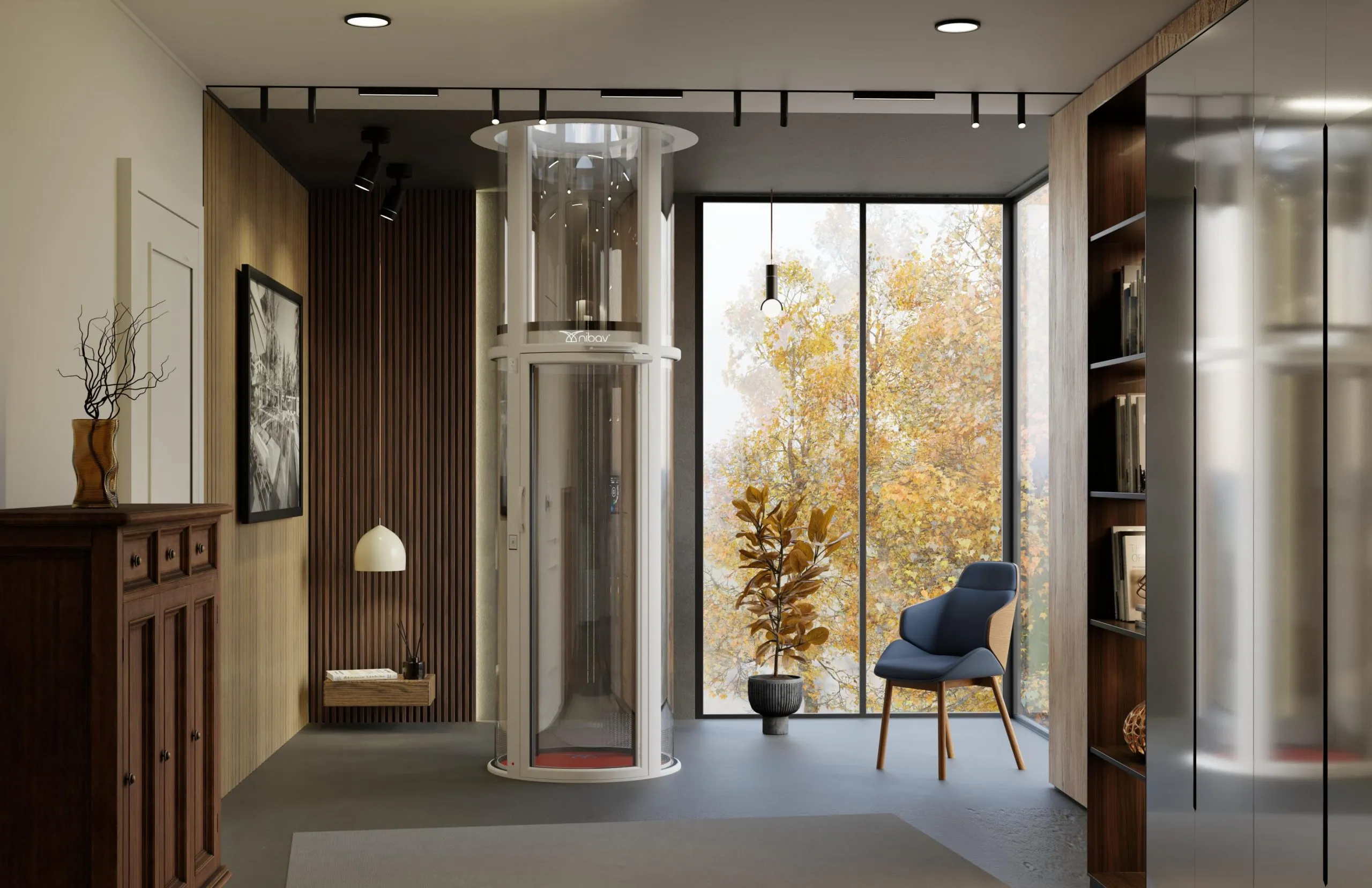
A residential elevator in today’s contemporary Indian homes is not a luxury, but rather an essential feature of comfort, accessibility, and style. As vertical living becomes more prevalent in our major metropolitan cities such as Chennai, Bengaluru, Mumbai, and Delhi, home elevators are changing how families navigate a multi-level home or space.
At Nibav Lifts India, we don’t believe a home elevator should be just functional. It should be fused with safety and smart technology, and aesthetically stunning design.
Whether you are renovating an ancestral home or designing a new swanky villa, here are the top 10 features to look for in a modern home elevator: self-supported, no pit, small footprint, energy efficient, certified safe, glass and panoramic, smart controls, low maintenance, quiet, and custom interior.
These modern features can enhance the usability and functionality of elevators as a stylish lifestyle upgrade.
Table of Contents
- 10+ Features in a Modern Residential Elevator
- 1. Self-Supported
- 2. Pitless and Machine Room-Less Install
- 3. Compactness for Best Usage of Very Little Space
- 4. Energy Efficiency & Eco-Friendly Buildings
- 5. Certified Safety Features and Safety Standards
- 6. Panoramic Glass Cabin for Contemporary Design
- 7. Smart Controls & Digital Integration
- 8. Low Maintenance and Long-Lasting
- 9. Quiet Operation
- 10. Custom Interiors and Premium Finishes
- Bonus: Modular Flexibility and Move-Ready
- Conclusion: Make the Smart Move
10+ Features in a Modern Residential Elevator
1. Self-Supported
Instead of needing heavy civil work, one of the biggest game-changing attributes of residential lifts available today is a self-supporting structure. This means if a home elevator is self-supporting, it can hold itself up without relying on columns, beams, or walls.
This transformation certainly removes civil work from the installation phase, but what it does is simplify the installation process completely. For example, self-supporting elevators can be inserted in non-routine elevator spaces such as balconies, existing stairwells, and corners. Homeowners can adapt easily through their renovation or retrofitting.
2. Pitless and Machine Room-Less Install
The conventionally accepted design of elevators often entails high vertical access. This means that pitless and machine room-less installations must be synonymous. A modern residential elevator is designed to be pit-free and free of machine rooms, making it much easier for installation into existing residences.
Surface depth may be such that you may need to pour, but in terms of digging, you are not going below grade. And again, no machine room! Or alternatively, you can have your elevator separately, perhaps near your garage. This is an attractive design consideration for older homes, where you do not want to disturb the structure.
Avoiding lifts with a pit is not only a structural cost saver but also ensures that you protect your home from potential termite infestation and dust. If there is no room in the lift shaft, there will be space in the lobby, and if it is inside the elevator shaft, it will save area on the ground and money — all while delivering a clean, compact system.
3. Compactness for Best Usage of Very Little Space
Space is always at a premium in homes — even more so in urban areas. New builds are configured with intelligent capacity systems in mind, with efficient shaft-to-cabin ratios and therefore smaller shafts with better internal cabin space, especially compared to older lifts.
The new models that top manufacturers are creating allow for comprehensive lifts to require as little as 3.3 feet in diameter, which can still include 3–4 people — ideal for a villa, duplex, or even a compact townhouse. Let the lift take up minimal space with a compact footprint, which avoids waste and maximizes space utilization in your home.
4. Energy Efficiency & Eco-Friendly Buildings
Homeowners are increasingly aware of their responsibility to care for the environment — and rightly so. Pick an elevator that operates on single-phase power and is designed for low energy consumption.
Some advanced air-driven or pneumatic elevators even consume power only while ascending, and zero power when descending. These are also considered energy-efficient when compared to hydraulic or oil-based systems. No oil, no lubrication, and no messy maintenance mean they are cleaner and greener.
5. Certified Safety Features and Safety Standards
Safety is non-negotiable. A modern home elevator should be constructed with international certifications like TÜV SÜD or ISO 9001. Conformity to standards of quality and performance should also be part of your consideration.
Safety features to look for in your elevator include:
- Emergency landing and descent during power outages
- Alarm systems
- Child safety switches
- Interlock doors
- Rapid rescue access in case of emergencies
- Backup fan and lighting in the cabin
Smart designs now mean that elevators can automatically descend to a safe level during power failures without needing battery backup. These built-in mechanisms ensure safety for seniors, kids, and everyone in your home.
6. Panoramic Glass Cabin for Contemporary Design
An elevator isn’t just a functional product – it’s part of your home’s design language. Choose a lift that features panoramic glass panels made of polycarbonate, which is 250 times stronger than regular glass and even used in bulletproof applications.
These cabins create an open, light-filled space that adds luxury to your home. Today’s elevators are architectural and design statements — not just machines. With options like smoked glass finishes and curved designer profiles, they can complement any aesthetic style.
7. Smart Controls & Digital Integration
As homes become smarter than ever, elevators should follow suit. Most top models today come with touchscreen cabin displays, smart landing panels, and mobile app connectivity to control the elevator via smartphone.
Look for features like:
- Gesture control
- Digital twin/app-based operation
- LIDAR or LiFi navigation for smooth landing
- Voice control integration
- Auto-return to a default floor when idle
With real-time functionality like usage history, energy consumption tracking, and remote monitoring, modern elevators have become part of your smart home ecosystem.
8. Low Maintenance and Long-Lasting
If you’ve owned older elevators, you’ll know how frequently they needed maintenance and lubrication. But with modern models, those days are gone.
Today’s residential elevators are low-maintenance because of:
- Air-driven or gearless motors
- No oil or hydraulic fluid
- Rust-proof construction (aluminum and galvanized steel)
- Modular designs for easier servicing
- Longer service intervals (once every 4 months instead of every month)
Some brands even offer lifetime warranties on motors and structural components — reducing your long-term cost of ownership.
9. Quiet Operation
No one wants an elevator that rumbles through the house. Choose elevators with silent operation, ideally with noise levels under 57 dB — quieter than a normal conversation.
Modern engineering improvements like soundproof motors, insulated shafts, and screwless assembly ensure your elevator operates smoothly and silently, blending into your home’s daily rhythm.
10. Custom Interiors and Premium Finishes
Your elevator should reflect your style. Whether it’s matte black textures, mirror-polished finishes, warm wood interiors, or custom engravings, today’s elevators offer a high level of customization.
Popular interior upgrades include:
- Mood lighting (ambient or star-lit ceilings)
- Removable leather seating (mono-pillar style)
- Custom-engraved cabin walls
- Chrome or smoked door handles
- Hydro-dipped designer finishes
Some even offer premium editions like “Midnight Editions” or “Grande” models, which come with taller cabins and aesthetic embellishments.
Bonus: Modular Flexibility and Move-Ready
Your needs might change — more floors, a change in home layout, or even moving to a new house. The best elevators are modular and moveable, allowing for upgrades and relocation.
Choose models that are:
- Expandable (from G+1 to G+2 or G+3)
- Relocation-friendly (completely knock-down design)
- Compatible with evolving home layouts
That kind of flexibility means your elevator isn’t just a luxury—it’s a long-term investment.
Conclusion: Make the Smart Move
A modern residential elevator is an investment in comfort, convenience, and lifestyle. With advanced engineering, green technology, and stunning design, today’s home lifts are far more than just vertical transport. They’re a symbol of modern living.
Whether you’re renovating your dream home or building one from scratch, choosing a residential elevator with these 10 essential features ensures you’re making a smart, future-proof decision for you and your family.
Author
No comments yet.