 By Sriram on July 29, 2025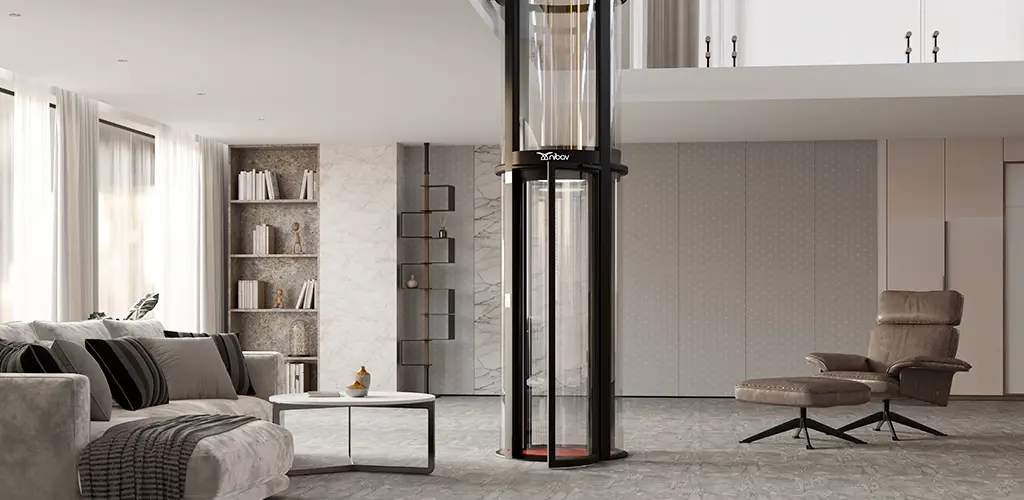
As urban homes in India become increasingly vertical, homeowners now have more options for accessible and efficient mobility. Whether you’re building a luxurious duplex, upgrading your existing home for convenience and safety, or simply exploring the possibilities, deciding between a home elevator and a platform lift is a crucial step.
A home elevator may be your better option if you’re looking for a highly stylish, long-term addition that adds resale value, integrates with your interiors, and serves two or more levels. A platform lift, on the other hand, could make more sense if you’re seeking a simple, budget-friendly solution that supports shorter distances or provides chair-lift access for a single floor. Choosing between the two depends on your home’s layout, aesthetic goals, budget, and mobility needs.
Let’s break down each type and see which one fits your lifestyle best.
Table of Contents
What Is a Home Elevator?
A home elevator is a vertical transport system designed for private residences. These elevators are smaller than commercial models, consume less energy, and are perfect for low-rise buildings like duplexes, villas, and bungalows.
Modern home elevators are enclosed, come with fully finished cabins, and are often panoramic or cylindrical in design. They’re built with high-tech safety features and can operate using rails, tracks, or air-driven pneumatic systems. Most can serve up to three or four stops, and leading models are self-supported, pitless, and machine-room-less, which is ideal for Indian homes where structural space is limited.
Some advanced lifts, such as those made by Nibav, use polycarbonate glass – similar to bulletproof glass – for a strong yet stylish finish. These elevators can be installed in under 48 hours without any welding or heavy civil work.
What Is a Platform Lift?
A platform lift is a more basic, open-style lift meant to assist people – typically wheelchair users or those with mobility issues – across short vertical distances. Common installations include 2–6 feet of elevation, such as between a driveway and an entry porch or from the ground floor to a split-level interior.
Platform lifts prioritise function over form. They consist of an open platform with safety rails and run on hydraulic or electric systems. While useful in certain conditions, they aren’t built for long-term, aesthetic integration or multi-floor access like home elevators.
Home Elevator vs. Platform Lift: Feature-by-Feature Breakdown
Here’s how the two systems stack up:
| Feature | Home Elevator | Platform Lift |
| Design & Aesthetics | Enclosed cabin, panoramic view, styled to match interiors | Open platform, industrial look |
| Space Requirement | Compact shaft, self-supported, no pit or headroom | Needs clear ramp and floor space |
| Installation Time | 48–72 working hours | 1–2 days |
| No. of Stops | Up to 4 floors (G+3) | 1–2 stops |
| Capacity | 210–240 kg (2–3 persons) | Typically 1 wheelchair |
| Power Supply | Single-phase, low power (3.7 kVA max) | Electric or hydraulic, variable usage |
| Safety Features | Auto descent, child lock, lighting, alarms | Basic rails and stop switches |
| Maintenance | Low maintenance (every 3–4 months) | Requires periodic servicing |
| Accessibility | For all users, especially elderly | Primarily for wheelchair users |
| Customisation | Cabin design, lighting, engravings, seating | Very limited |
| Cost | Moderate to high (value-added) | Low to moderate |
| Long-Term Value | Adds resale value, future-proof | Functional but not value-adding |
When Should You Choose a Home Elevator?
1. Multi-Level Living
If your home spans more than one floor – like a duplex or triplex – a home elevator provides easy, everyday access for everyone in the family. It eliminates the physical effort of stairs and adds a luxury element to your home.
2. Modern Styling
Today’s home elevators come with a wide variety of design customisations – smoked polycarbonate glass, leather interiors, star-lit ceilings, hidden fans, ambient lighting, and engraved panels. They are as much a design statement as they are a convenience.
3. Structural Simplicity
Modern elevators don’t require pits, overhead space, or machine rooms. Thanks to their self-supported structures, civil modifications are minimal – an enormous benefit when working within the architectural constraints of Indian homes.
4. Quick & Clean Installation
Using Completely Knocked Down (CKD) kits, many home elevators can be installed within 48 hours, with no welding, no dust, and no damage to your interiors. The modular system ensures consistency in quality and timeliness.
5. Long-Term Investment
Modern elevators require very little maintenance and use zero energy during descent, making them both efficient and eco-friendly. Some manufacturers even provide lifetime warranties on critical components like motors and seals.
Nibav is one such brand, offering TÜV SÜD certified lifts that meet international standards in safety and performance – perfect for Indian households.
When Should You Choose a Platform Lift?
1. Budget-Friendly
If you’re working with a tighter budget and need to manage short vertical distances – like a porch step or half-floor – platform lifts are the most cost-effective option.
2. Temporary or Transitional Use
If you’re recovering from surgery or have a visiting family member with mobility needs, a platform lift can offer a short-term solution without long-term investment.
3. No Space for an Enclosed Shaft
When space is too limited to build a shaft or accommodate an enclosed elevator, platform lifts can be installed in open areas with minimal civil work. However, they are less protected from weather conditions, especially in outdoor applications.
4. Wheelchair Access
They’re ideal for single-user, wheelchair-specific scenarios, especially in buildings where permanent structural changes aren’t possible.
Think Long-Term
A platform lift might be more affordable upfront, but its usability, design appeal, and long-term flexibility are limited. Home elevators, on the other hand, offer scalability, durability, and a high level of personalisation.
For example:
- Upgrade from G+1 to G+3 without changing the lift
- Relocate your elevator to a new home
- Retrofit design, finishes, and tech features as needs evolve
Your lift should evolve with your home, not become obsolete.
Safety: A Must-Have for Both
Safety is essential for any mobility device – but home elevators tend to offer more advanced safety systems, including:
- Automatic emergency descent
- Manual floor selection override
- Child lock systems
- Alarm systems and intercom
- Ventilation fans and LED lighting
Manufacturers like Nibav incorporate all of these as standard, making their lifts ideal for homes with elderly residents, children, or individuals with health considerations.
Power & Energy Efficiency
Pneumatic home elevators run on single-phase power, just like a refrigerator, and often consume zero electricity while descending. This makes them especially well-suited for Indian homes, where power stability and energy savings are ongoing concerns.
Platform lifts may consume less energy overall, but they require more maintenance – especially those exposed to outdoor conditions or built with open control panels.
Aesthetics & Space Saving
Today’s home elevators are sleek, minimalistic, and highly customisable. From hidden screws and curved profiles to hydro-dipped panels and mood lighting, these lifts elevate more than just your physical space – they elevate your design game.
Platform lifts, by contrast, serve a purely functional purpose. Their industrial look and open frame do little to enhance your interior decor.
Final Word: Which One Is Right for You?
If you’re looking for a solution that delivers comfort, safety, intelligent features, and long-term lifestyle enhancement, a home elevator is your best bet. It supports multiple levels, increases property value, and elevates the way you experience your home.
Platform lifts are a practical option when space is tight, needs are temporary, or the goal is basic accessibility for a single user.
With innovations like self-supported shafts, panoramic cabins, smart controls, CKD installation, and TÜV-certified safety, manufacturers like Nibav are redefining what it means to own a residential lift in India.
Before you make your final decision, consider your current needs – but always plan for the future. After all, the best mobility solution shouldn’t just elevate you from one floor to the next – it should elevate your lifestyle as a whole.
Author
No comments yet.