 By Sriram on January 19, 2026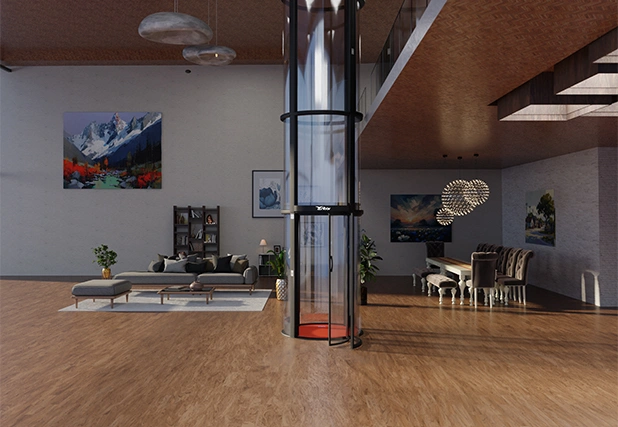
Home elevators are no longer a luxury reserved for elite villas — they’ve become a practical and stylish feature for modern Indian homes. With rapid urbanisation, multi-storey living, and growing demand for accessibility solutions for elderly and differently-abled family members, residential lifts are in high demand in 2026.
A well-chosen home elevator enhances convenience, adds lasting property value, and elevates everyday living.
This guide explores the top 10 home elevator types and options for Indian homes in 2026, helping you make a smart, informed choice based on your space, budget, and lifestyle needs.
Table of Contents
- Why Install a Home Elevator?
- Understanding Elevator Types: What Works Best for Your Home
- The Top 10 Home Elevator Types for Indian Homes
- 1. Compact Hydraulic Home Elevator
- 2. High-Speed Traction Home Lift
- 3. Premium Pneumatic Tube Elevator
- 4. Machine Room-Less (MRL) Smart Lift
- 5. Screw-Drive Residential Lift
- 6. Luxury Glass Cabin Elevator
- 7. Ultra-Compact Urban Home Lift
- 8. Smart Home Elevator with Integrated Controls
- 9. Wheelchair-Accessible Residential Lift
- 10. Budget-Friendly Home Elevator
- Top 10 Home Elevators in India (2026):
- Home Elevator Price Ranges in India (2026)
- How to Choose the Right Home Elevator?
- Conclusion: Elevate Everyday Living
- Frequently Asked Questions (FAQs) – Home Elevators in India (2026)
- 1. What is the best type of home elevator in India in 2026?
- 2. How much does a home elevator cost in India in 2026?
- 3. Can a home elevator be installed in an existing house?
- 4. Are home elevators safe for elderly people and children?
- 5. How much space is required to install a home elevator?
- 6. Do home elevators consume a lot of electricity?
- 7. What is the maintenance cost of a home elevator in India?
- 8. How many people can a home elevator carry?
- 9. How long does it take to install a home elevator?
- 10. Does installing a home elevator increase property value?
Why Install a Home Elevator?
1. Enhanced Comfort & Accessibility
Climbing stairs multiple times a day is tiring, especially for elderly residents or those with mobility challenges. A residential lift ensures effortless movement between floors for all family members.
2. Boosted Property Value
Homes equipped with elevators appeal to a broader segment of buyers and often command higher resale value. As accessibility and luxury features grow in importance, an elevator becomes a smart long-term investment.
3. Space Efficiency & Modern Design
Modern home lifts don’t require extensive building modifications. Compact designs like machine-room-less, pneumatic, and screw-driven systems fit even space-constrained homes without sacrificing performance or aesthetics.
4. Safety & Peace of Mind
Today’s residential elevators include numerous safety features — emergency backups, automatic door interlocks, overload alarms, and child-proof mechanisms — ensuring a secure ride for all ages.
5. Aesthetics & Luxury Appeal
Far from industrial boxes, contemporary elevators are design statements. With glass cabins, customizable interiors, ambient lighting, and sleek finishes, they elevate both form and function in a home’s interior.
Understanding Elevator Types: What Works Best for Your Home
Choosing the right elevator type depends on your home’s size, usage frequency, budget, and architectural constraints. Here’s a breakdown of popular technologies you’ll find in 2026:
1. Hydraulic Home Lifts: Smooth & Quiet Operation
Hydraulic lifts use pressurised fluid to move the cabin, delivering a silky-smooth, quiet ride — ideal for typical Indian villas and multi-storey homes. These are cost-effective and reliable for homes with up to four floors.
Pros:
- Smooth, jerk-free movement
- Lower installation costs
- Quiet performance
Considerations:
- Periodic maintenance of hydraulic fluid systems
- Best suited for low-to-mid rise homes
Best for: Families with elderly members and mid-sized homes seeking comfort.
2. Traction Elevators: Speed & Efficiency
Traction lifts use ropes and counterweights to move the cabin, offering efficient vertical travel and better speed over greater heights. They are often chosen for homes with more than four floors or where frequent daily use is expected.
Pros:
- Higher speeds suitable for taller homes
- Energy-efficient over long use
- Robust performance
Considerations:
- Requires more overhead space
- Installation complexity and cost can be higher
Best for: Large duplexes, multi-storey homes and frequent-use environments.
3. Pneumatic (Vacuum) Elevators: Futuristic & Compact Design
Pneumatic lifts use air pressure to move a transparent cabin up and down a vertical tube. These sleek systems are visually striking and often fit into architectural designs as a centerpiece rather than a utility.
Pros:
- No pit or machine room needed
- Transparent aesthetic enhances interiors
- Minimal footprint
Considerations:
- Limited passenger capacity
- Slower speeds compared to traction systems
Best for: Stylish duplexes, penthouses, and homes prioritising design.
4. Machine Room-Less (MRL) Elevators: Space-Saving Champions
MRL elevators house mechanical components inside the shaft, eliminating the need for a separate machine room. This makes them ideal for space-constrained homes while still delivering efficient performance.
Pros:
- Saves significant architectural space
- Lower civil work costs
- Efficient operations
Considerations:
- Slightly more complex servicing
- Some models have weight limitations
Best for: Compact urban homes or premium villas with limited space.
5. Screw-Driven Elevators: Simple & Dependable
Screw-driven lifts operate using a rotating screw shaft. Their simplicity translates to fewer moving parts and lower maintenance. While slower, they offer reliable, straightforward performance.
Pros:
- Very low maintenance
- No pit or headroom required
- Excellent for limited floor travel
Considerations:
- Slower motion
- Mechanical feel may not suit luxury preferences
Best for: Smaller homes with limited floors and straightforward accessibility needs.
The Top 10 Home Elevator Types for Indian Homes
Below are the top 10 elevator options to consider in India in 2026, chosen for performance, design adaptability, safety features, and suitability for Indian living spaces:
1. Compact Hydraulic Home Elevator
Overview: A refined hydraulic system for homes, delivering smooth movement and quiet performance.
Best For: Villas and multi-floor homes where comfort and low noise are priorities.
Highlights:
- Silky operation with minimal vibration
- Ideal for elderly usage
- Lower installation complexity
2. High-Speed Traction Home Lift
Overview: A traction-based system focused on performance for taller residences.
Best For: Multi-storey homes (4+ floors) and frequent daily use.
Highlights:
- Higher speed and energy efficiency
- Durable and robust build
- Consistent performance under frequent load
3. Premium Pneumatic Tube Elevator
Overview: A visually striking vacuum elevator that blends form and function.
Best For: Contemporary homes where design and space savings are equally important.
Highlights:
- Transparent cabin
- No pit or machine room
- Modern aesthetic appeal
4. Machine Room-Less (MRL) Smart Lift
Overview: An MRL lift that combines space savings with smart safety and control features.
Best For: Urban homes with space limitations.
Highlights:
- Space-efficient performance
- Advanced control systems
- Perfect for modern constructions
5. Screw-Drive Residential Lift
Overview: A simple, low-maintenance lift ideal for up to three floors.
Best For: Elder-centric and smaller homes.
Highlights:
- Very low maintenance
- Reliable and safe
- No additional machinery spaces required
6. Luxury Glass Cabin Elevator
Overview: A home elevator with panoramic glass interiors for a luxurious lifestyle.
Best For: Premium homes looking for elegance and visual appeal.
Highlights:
- Transparent design
- Custom lighting and finishes
- Great for showcasing interior style
7. Ultra-Compact Urban Home Lift
Overview: A space-optimised lift for modern apartments or homes with limited shaft space.
Best For: Compact urban houses and terrace homes.
Highlights:
- Minimum structural changes
- Efficient and quiet
- Fits in narrow shafts
8. Smart Home Elevator with Integrated Controls
Overview: A residential lift with intelligent control interfaces and safety systems.
Best For: Tech-savvy homeowners and smart homes.
Highlights:
- Touch interfaces
- Safety backups and sensors
- Efficient energy use
9. Wheelchair-Accessible Residential Lift
Overview: Designed to meet universal access requirements with easy entry and safety features.
Best For: Homes with differently-abled or elderly family members.
Highlights:
- Wheelchair-ready platform
- Easy boarding and alighting
- High-standard safety features
10. Budget-Friendly Home Elevator
Overview: A cost-effective option that balances essential performance with affordability.
Best For: First-time buyers or budget-conscious families.
Highlights:
- Core functionality without premium extras
- Safe and reliable
- Minimal structural changes
Top 10 Home Elevators in India (2026):
| Elevator Type | Best For | Floors Supported | Space Requirement | Noise Level |
| Hydraulic Home Elevator | Smooth & comfortable daily use | Up to 4 floors | Medium (Pit required) | Very Low |
| Traction Home Elevator | Taller homes & frequent usage | 4–6 floors | High (Overhead needed) | Low |
| Pneumatic (Vacuum) Elevator | Modern design & space saving | Up to 5 floors | No pit | Low |
| Machine Room-Less (MRL) Elevator | Compact urban homes | Up to 5 floors | Low | Low |
| Screw-Driven Home Lift | Low maintenance & safety | Up to 3 floors | Low (No pit) | Moderate |
| Glass Cabin Home Elevator | Luxury interiors & aesthetics | Up to 5 floors | Medium | Low |
| Wheelchair-Accessible Elevator | Elderly & accessibility needs | Up to 4 floors | Medium | Very Low |
| Smart Home Elevator | Tech-enabled modern homes | Up to 5 floors | Low | Low |
| Ultra-Compact Home Lift | Space-constrained houses | Up to 3 floors | Very Low | Low |
| Budget Residential Elevator | Cost-conscious homeowners | Up to 3 floors | Medium | Moderate |
Home Elevator Price Ranges in India (2026)
Here’s a general idea of anticipated price ranges for different residential elevator types in India in 2026 (prices will vary based on features, installation complexity, and finishes):
| Elevator Type | Approx. Price Range (₹) |
| Hydraulic Home Elevator | ₹10– ₹16 L |
| Traction Home Lift | ₹11 – ₹19 L |
| Pneumatic (Vacuum) Lift | ₹10 – ₹24 L |
| MRL Smart Lift | ₹9 – ₹18 L |
| Screw-Driven Lift | ₹10 – ₹19 L |
Note: Actual prices depend on customization, site conditions, and selected features. Always request quotes from authorised providers for exact figures.
How to Choose the Right Home Elevator?
1. Assess Your Available Space
Evaluate shaft dimensions, pit needs, and headroom before selecting a lift type — pneumatic or MRL systems require fewer structural requirements.
2. Match to Your Home Use Case
Think about daily usage frequency, number of floors, and load requirements (e.g., wheelchair accessibility).
3. Prioritise Safety Features
Ensure features like emergency backup, automatic door interlocking, and overload protection are included.
4. Review Maintenance & Support
Choose options with accessible service networks and clear maintenance policies to safeguard long-term performance.
Conclusion: Elevate Everyday Living
Choosing the right home elevator means balancing comfort, safety, design, and cost. With a wide range of options available in 2026 — from smooth hydraulic systems and space-saving MRL lifts to futuristic pneumatic designs — Indian homeowners can select a solution tailored to their needs.
Whether you prioritise accessibility for loved ones, daily convenience, or interior elegance, this guide helps you navigate the top residential elevators in India. Invest wisely, plan carefully, and elevate both your home and quality of life with the right lift solution in 2026.
Frequently Asked Questions (FAQs) – Home Elevators in India (2026)
1. What is the best type of home elevator in India in 2026?
The best home elevator depends on your requirements. Hydraulic elevators are ideal for smooth and quiet rides, pneumatic elevators are best for space-saving and modern design, while traction and MRL elevators suit taller multi-storey homes. Choosing the right type depends on space, budget, and usage needs.
2. How much does a home elevator cost in India in 2026?
Home elevator prices in India generally start from ₹10 lakh and can go up to ₹25 lakh or more, depending on the elevator type, number of floors, cabin size, safety features, and customization options.
3. Can a home elevator be installed in an existing house?
Yes, modern home elevators can be installed in existing houses. Many systems require no pit or machine room, making them suitable for retrofitting with minimal civil work.
4. Are home elevators safe for elderly people and children?
Yes. Home elevators are designed with advanced safety features such as emergency backup, automatic door locking, child safety sensors, overload protection, and smooth start-stop technology, making them safe for all age groups.
5. How much space is required to install a home elevator?
Space requirements vary by elevator type. Compact home lifts can be installed in as little as 1–1.2 square meters, while larger elevators may need additional shaft or overhead space.
6. Do home elevators consume a lot of electricity?
No. Most modern residential elevators are energy-efficient and consume power similar to common household appliances. Some systems consume electricity mainly during upward travel and very little while descending.
7. What is the maintenance cost of a home elevator in India?
Annual maintenance costs typically range between ₹15,000 and ₹40,000, depending on the elevator type, usage frequency, and service plan. Low-maintenance designs help reduce long-term expenses.
8. How many people can a home elevator carry?
Home elevators usually support 2 to 5 persons or 250–400 kg. Larger models are also available for wheelchair access or higher capacity requirements.
9. How long does it take to install a home elevator?
Installation generally takes 2 to 4 weeks, depending on site conditions, elevator type, and customization requirements. Pre-engineered systems can be installed faster.
10. Does installing a home elevator increase property value?
Yes. A home elevator significantly increases property value by improving accessibility, convenience, and luxury appeal. It also makes the property attractive to a wider range of buyers, including senior citizens.

Arjun Iyer
Very informative this list helped me compare top home elevator options across India.
Bhavika Singh
Great overview of the best models with key features perfect for planning a home lift purchase.
Deepika reddy
Helps break down the benefits of each home elevator very useful before deciding.
Divya Kapoor
Clear comparisons of features, safety, and style made choosing a lift much easier
Eshwar Patel
Good guide for understanding which home elevators offer the best value for money.
Guna sekar
Loved the focus on energy efficiency and modern design in the top elevator choices.
Himansu sharma
Helpful list that highlights what makes each elevator stand out for Indian homes.
Akshay patel
Very useful article gives a clear idea of which home elevator models are top rated